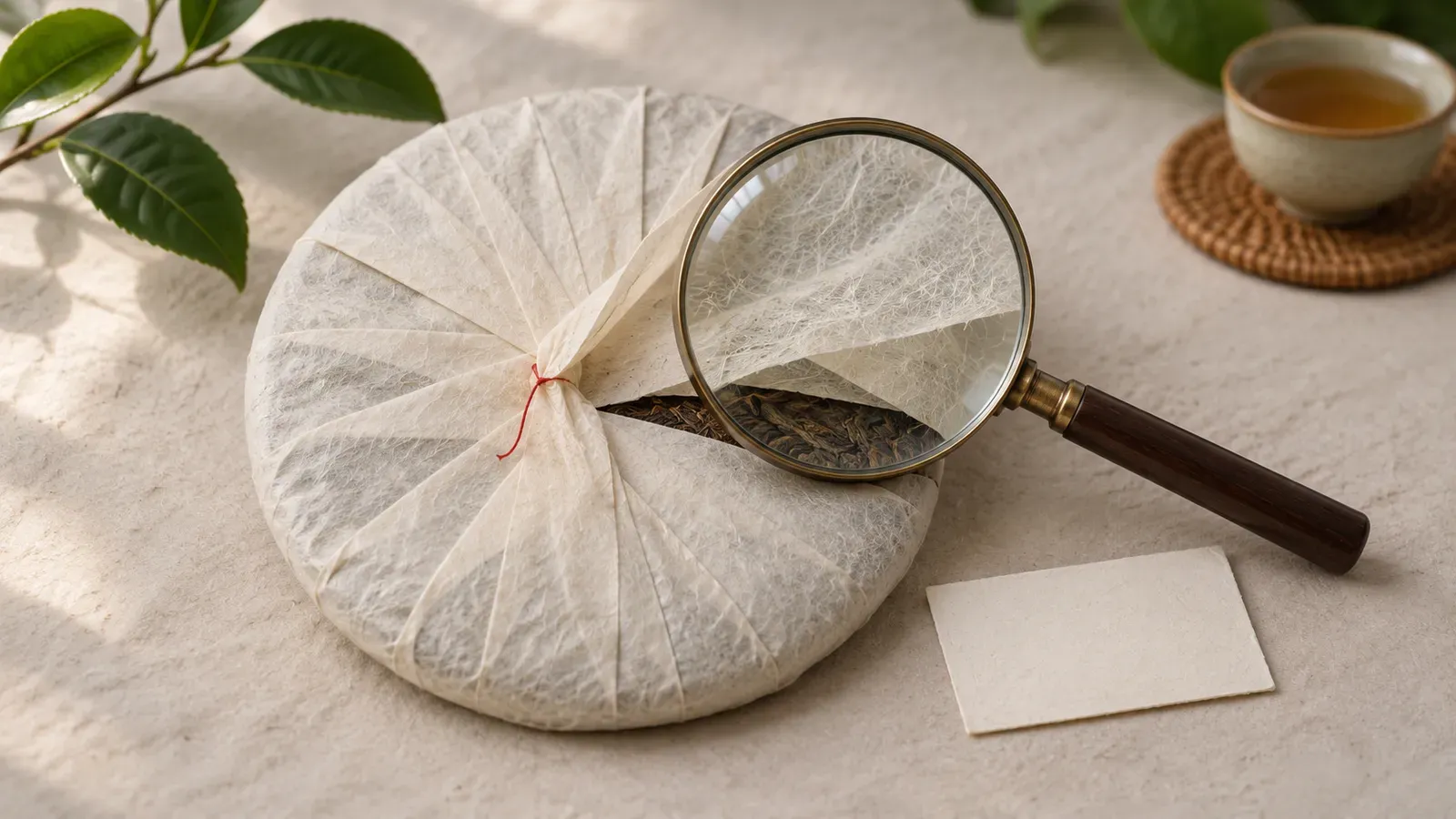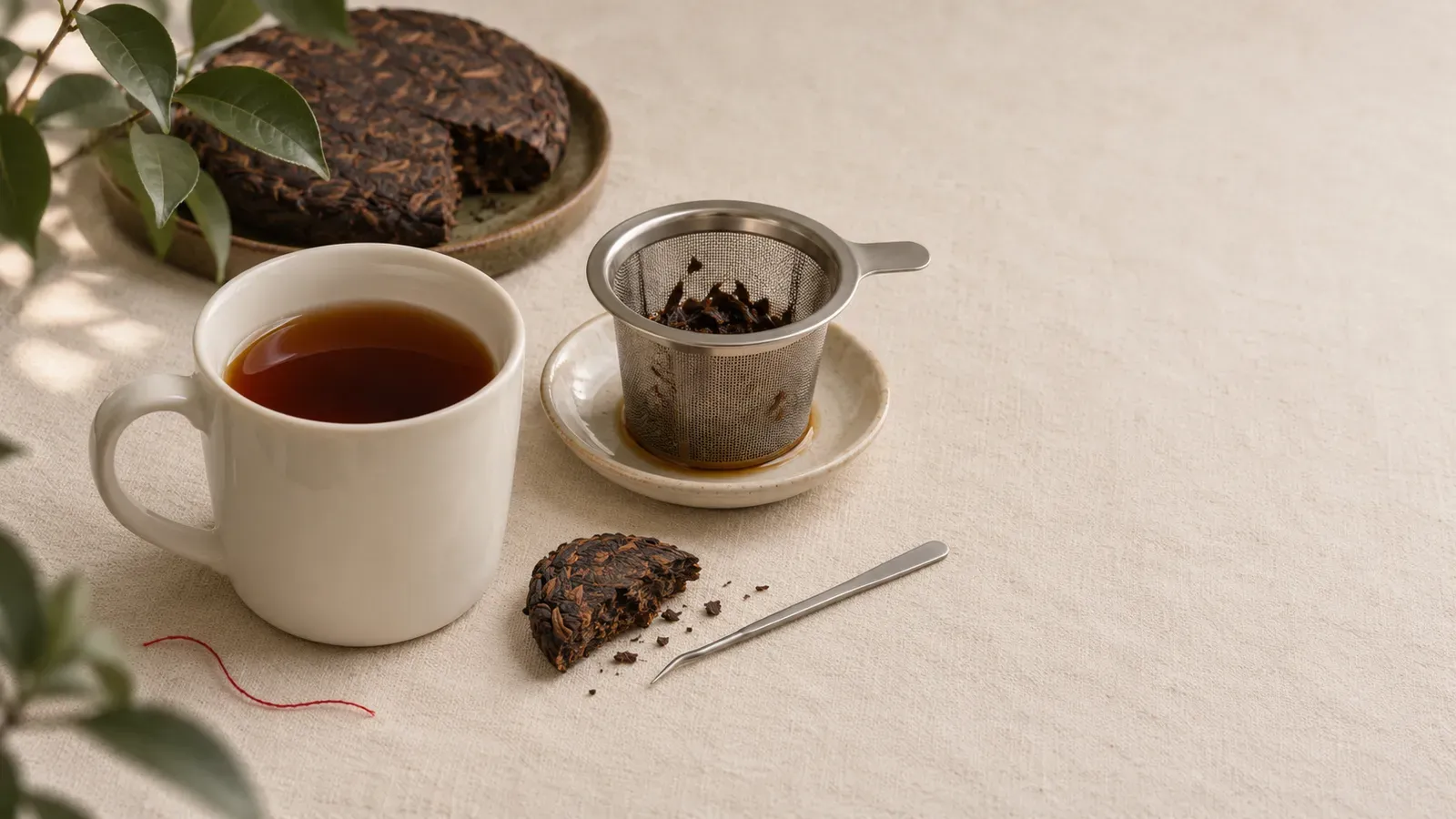
Pu'er is one of the few teas that people keep for years on purpose. It does not need special equipment for that. It needs a clean, steady place and to be left alone.
What does pu'er need in storage?
| Factor | What to aim for | What goes wrong otherwise |
|---|---|---|
| Smell | A place with no odour of its own | Tea absorbs cooking, spice, perfume and paint smells and keeps them |
| Light | Dark, or at least out of direct sun | Sunlight fades the leaf and flattens the taste |
| Humidity | Moderate and steady. Roughly 60–70% relative humidity is the range most often quoted | Too damp and the cake can go mouldy. Very dry air slows ageing to a crawl |
| Temperature | Normal room temperature, without sharp swings | Heat with damp speeds up mould. Cold rooms slow change |
| Air | A little exchange, not a draught | Sealed airtight, raw pu'er stops developing. In a strong draught the aroma fades |
Where in the house should you keep it?
A shelf in a wardrobe-style cupboard, a drawer or a bookcase in a living room or study works well. The kitchen is the worst room, because of steam and cooking smells. Bathrooms, basements that feel damp, and windowsills are also poor choices. If you can smell the cupboard itself, such as fresh paint, varnish, mothballs or cedar, the tea will pick that up too.
What should you store pu'er in?
- The original paper wrapper. Leave it on. It protects the cake and still lets it breathe.
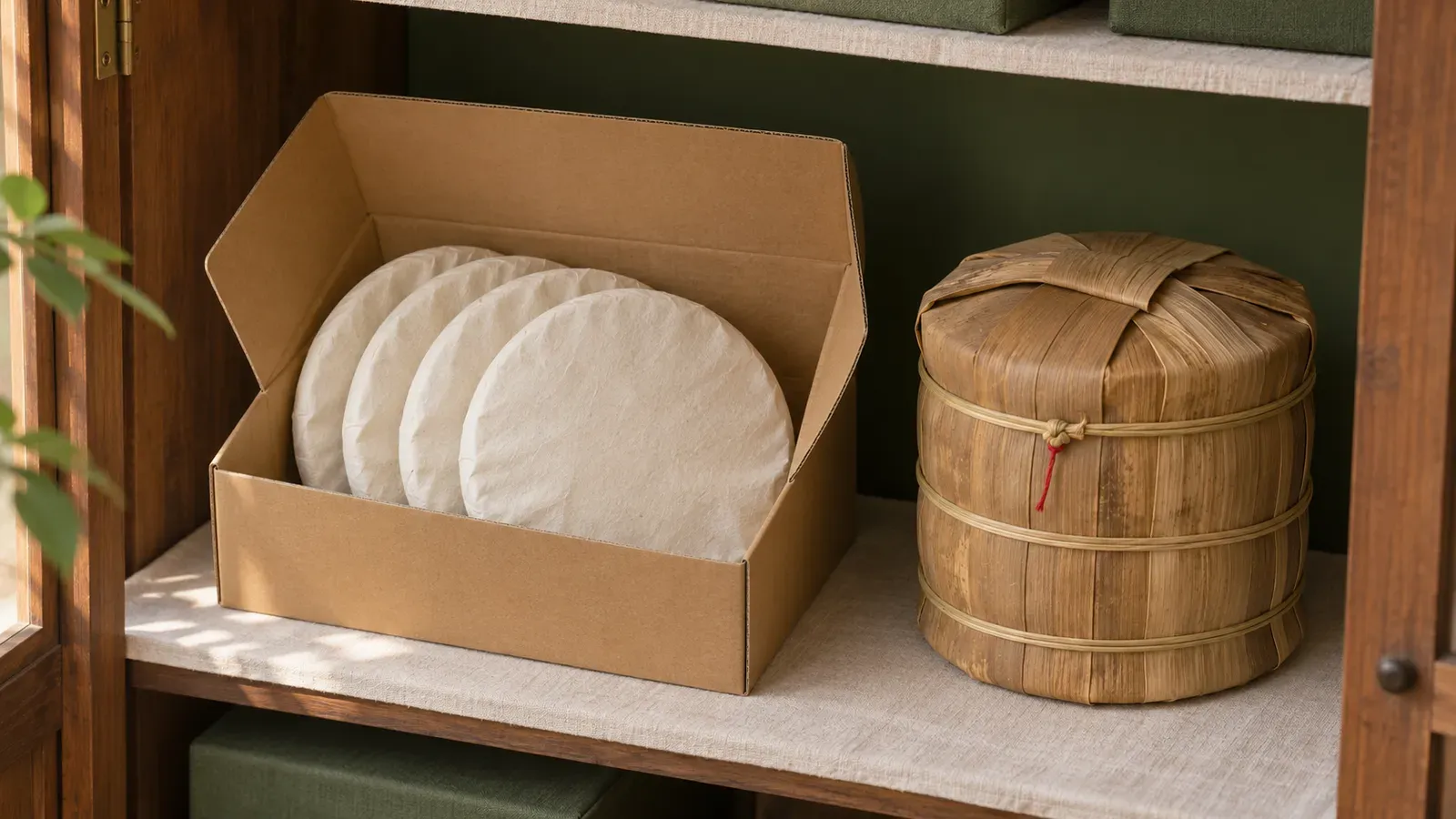
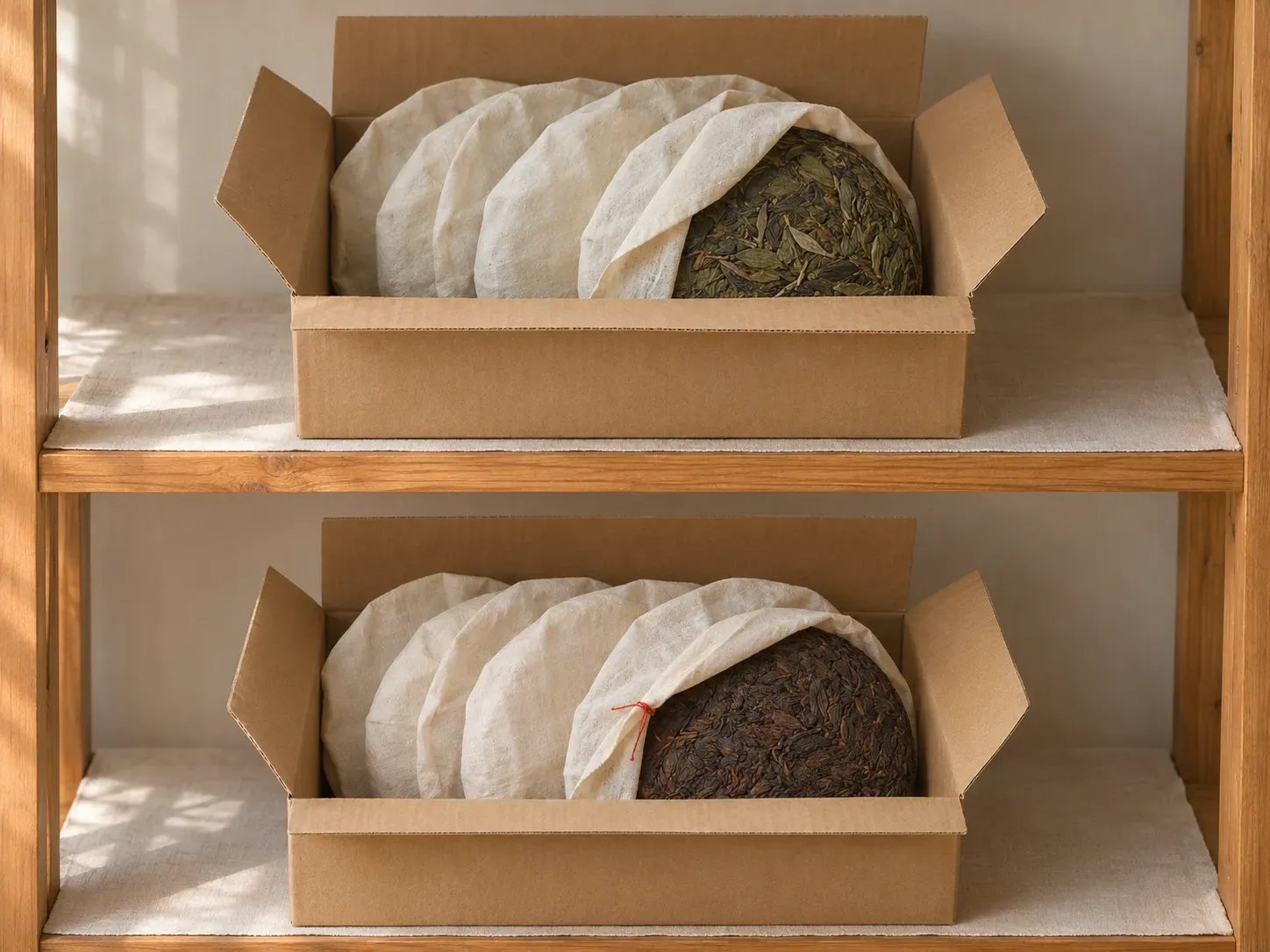
- A cardboard box. Plain, clean and odour-free. This is what most people use for a handful of cakes.
- The bamboo-leaf wrap (tong). If you bought seven cakes in their bamboo wrap, keep them in it.
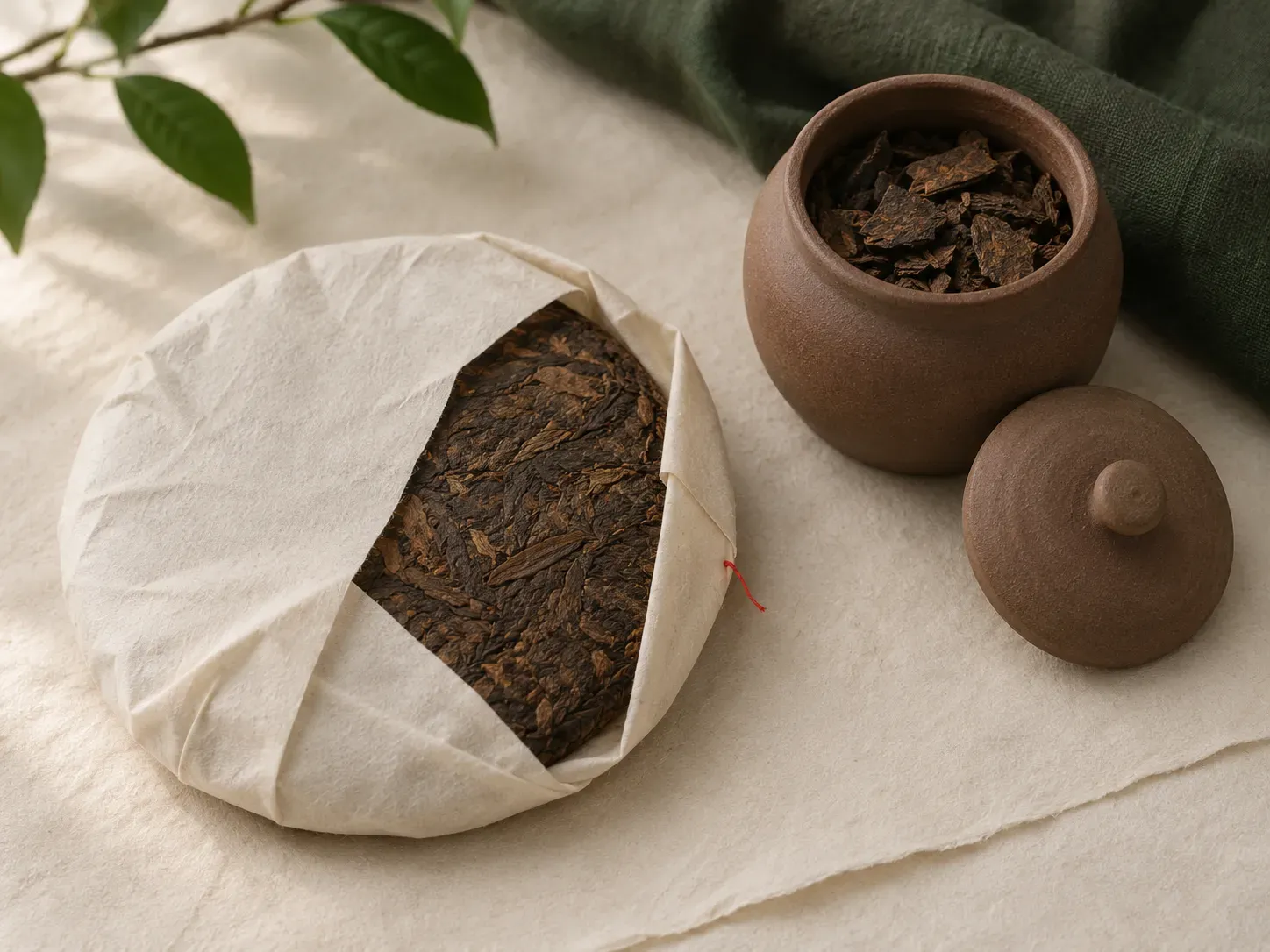
- An unglazed clay jar. Useful for a cake you have already broken up for drinking.
Avoid containers with a smell of their own: new wooden boxes, scented tins, plastic tubs that held food.
Should ripe and raw pu'er be stored together?
No. Keep them in separate boxes, and ideally on separate shelves. Ripe pu'er has a strong earthy aroma that raw pu'er will absorb. For the same reason, keep pu'er away from scented teas such as jasmine or anything flavoured.
Should you put pu'er in the fridge or seal it in plastic?
Neither is a good idea for long storage. A fridge is damp, full of food smells, and causes condensation on the tea every time you take it out. Airtight plastic keeps smells out, which is useful for a few weeks of travel or shipping, but over years it cuts off the slow contact with air that raw pu'er needs in order to change. Ripe pu'er is more tolerant, but there is still no benefit in sealing it.
How do you tell if pu'er has gone mouldy?
Look and smell.
- Mould looks like fuzzy white, yellow or green patches, on the surface or between the leaves, and smells musty, like a damp cellar.
- Not mould: an even, slightly frosty look on some aged tea, and the golden tips of bud leaves, are normal.
If a cake smells clearly musty and shows fuzzy growth, do not drink it. If you are unsure, break it open: clean leaf inside with a normal tea smell is a good sign.
How long does pu'er keep?
Stored well, for many years. Ripe pu'er is ready to drink when it is made and mainly becomes smoother over its first few years. Raw pu'er changes much more: the bitterness and sharp floral notes of a young cake slowly give way to a deeper, rounder taste. There is no date after which well-kept pu'er must be thrown away. Trust your nose.