 Chama Cellar
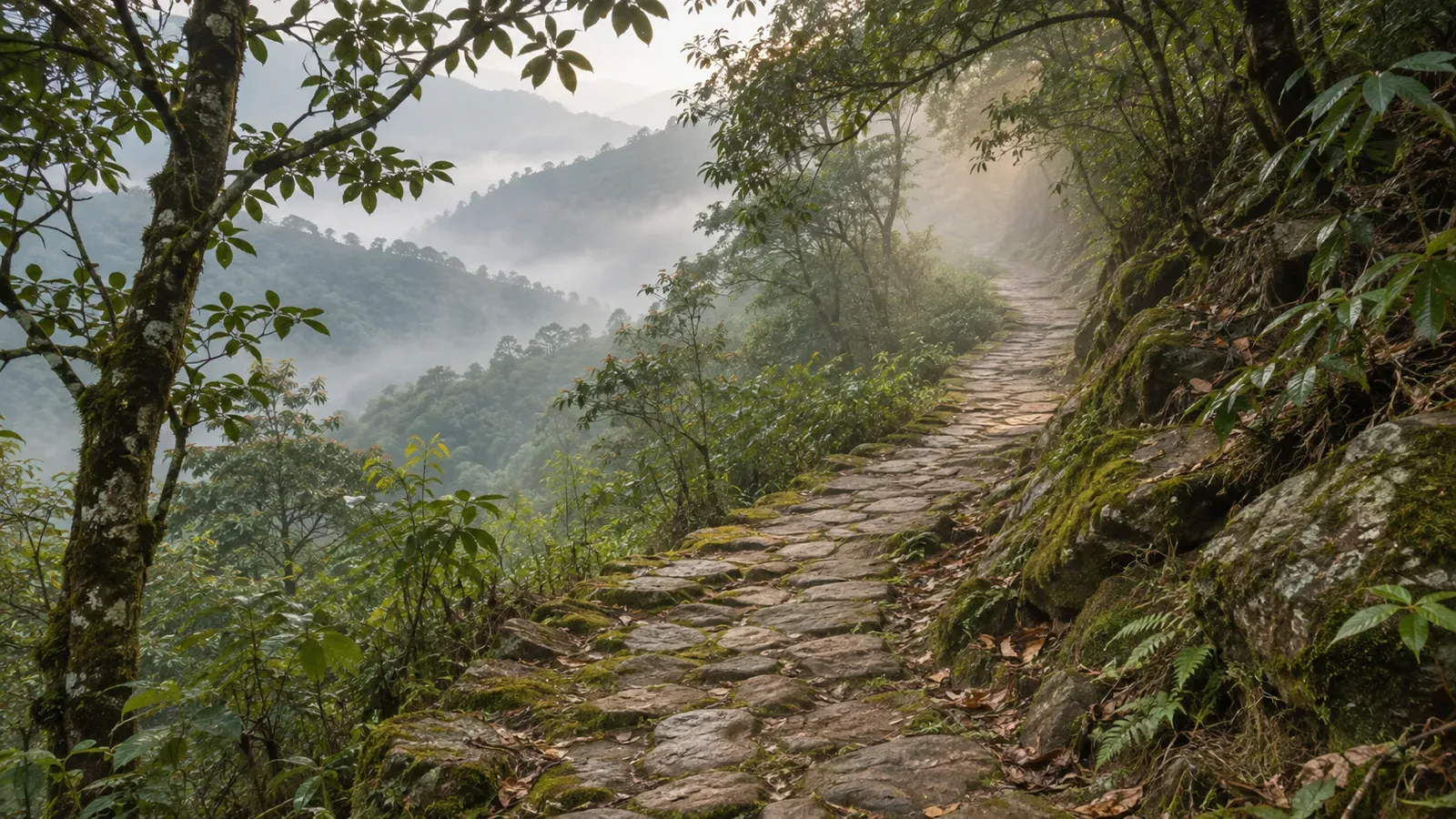
The Tea Horse Road, cha ma gu dao (茶马古道), was never a single road. It was a web of mule tracks and footpaths across some of the steepest country in Asia, worn in by people moving tea uphill and horses down.
Why were tea and horses traded for each other?
Each side had what the other lacked. Tea does not grow on the Tibetan plateau, yet it became a daily staple there, drunk with butter and salt. Chinese dynasties, for their part, needed war horses and could not breed enough of them in the farming lowlands. Tibet and the neighbouring highlands had horses.
The exchange became formal state business in the Song dynasty. In the 1070s the government set up a Tea and Horse Agency in Sichuan to control it, and later dynasties ran similar offices. The official horse trade faded during the Qing dynasty, when the court no longer needed the animals in the same numbers. The tea kept moving anyway, carried by private merchants along with salt, sugar, cloth, medicinal herbs, hides and wool.
When did the road operate?
Sources differ on the beginning. Tea is usually said to have reached Tibet during the Tang dynasty, between the seventh and ninth centuries, and the organised tea-for-horses trade dates from the Song. Some accounts place the origins of the trails themselves much earlier.
The end is clearer. Caravans were still working in the first half of the twentieth century. During the Second World War, when other supply lines into south-west China were cut, the route through Lijiang is recorded as having been especially busy. Motor roads into Tibet were built from the 1950s, and the long-distance caravans stopped within a generation.
The name itself is recent. It is generally credited to a group of Yunnan scholars who walked the route in 1990 and wrote about it afterwards. The traders who used the trails had no single name for them.
Where did the main routes run?
There were two main lines into Tibet, with many branches.
| Route | Started from | Main stops | Tea carried |
|---|---|---|---|
| Yunnan–Tibet | The tea mountains of Xishuangbanna, such as Yiwu, and the old town of Pu'er | Dali, Lijiang, Zhongdian (now Shangri-La), Deqin, then across eastern Tibet to Lhasa | Yunnan pressed tea, much of it mushroom-shaped jin cha and round cakes |
| Sichuan–Tibet | Ya'an | Kangding, then west across the plateau to Lhasa | Sichuan brick tea |
From Lhasa, some goods went on to Nepal and India. Other branches ran from the Yunnan tea country south into Laos, Burma and Vietnam, and north-east to Kunming and the rest of China.
The Yunnan route climbs from subtropical valleys to passes well above 4,000 metres and crosses the gorges of the Jinsha, Lancang and Nu rivers. A journey from the tea country to Lhasa took months, not weeks.
Who carried the tea?
In Yunnan, mostly mules and horses, in organised caravans called mabang (马帮). Each caravan had a leader who was responsible for the animals, the goods and the route. Caravans from the lowlands often went only as far as Dali, Lijiang or Zhongdian. There the loads were sold on to Tibetan traders, whose animals, including yaks, were better suited to the cold and the altitude.
On the Sichuan side, the stretch between Ya'an and Kangding was too steep and narrow in places for pack animals. Human porters carried the brick tea on wooden frames on their backs. Loads of 60 to 90 kilograms are commonly quoted, and photographs from the early 1900s show men carrying stacks taller than themselves. They rested standing, with the load propped on a short iron-tipped staff.
Why was the tea pressed into cakes and bricks?
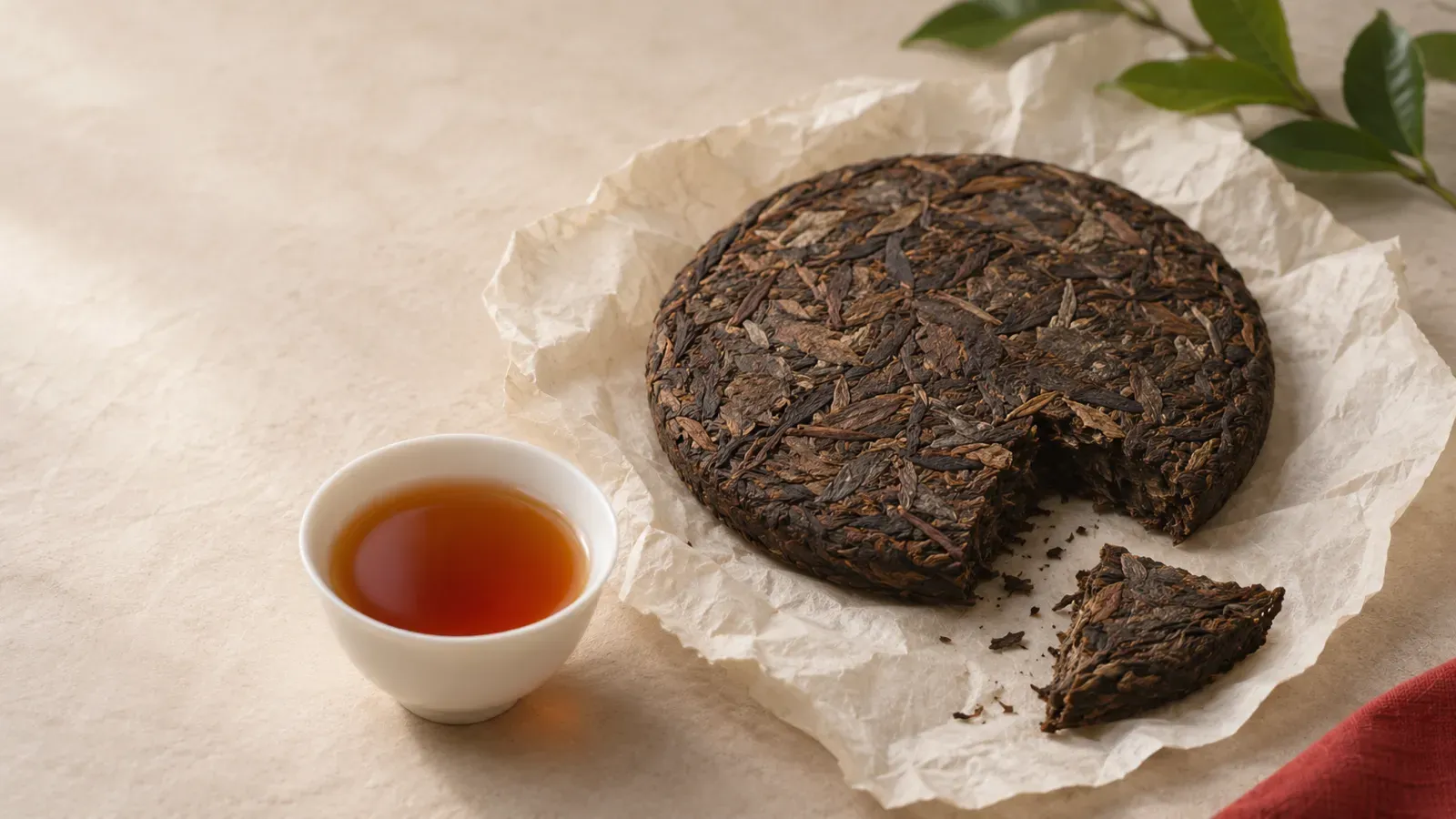
A mule can carry only so much, and the trip lasted months. Loose leaf is bulky, breaks up when it is knocked about, and soaks up rain and river spray. Pressed tea solved all three problems. It packed densely into bamboo wrapping, held its shape on a pack saddle, and came in pieces of fixed weight that were easy to count and trade. In some places bricks of tea are reported to have been used as a form of money.
The shapes that pu'er is sold in today, the cake, the brick, the tuo and the mushroom, are the shapes that suited this journey.
What remains today?
- Sections of paved trail. Short stretches of old stone path survive in Yunnan and Sichuan, some with hoof-worn hollows in the stones. Several lie near Ning'er, the old Pu'er.
- Market towns. Shaxi, between Dali and Lijiang, still has its old market square. The old towns of Lijiang and Dali grew rich on the caravan trade.
- Protection. In 2013 China listed sections of the road in Yunnan, Sichuan and Guizhou as protected national heritage sites.
- The tea. Pressed tea is still made in Yunnan and Sichuan for the Tibetan market.
The shop name Chama Cellar comes from cha ma, the words for tea and horse.