 Chama Cellar
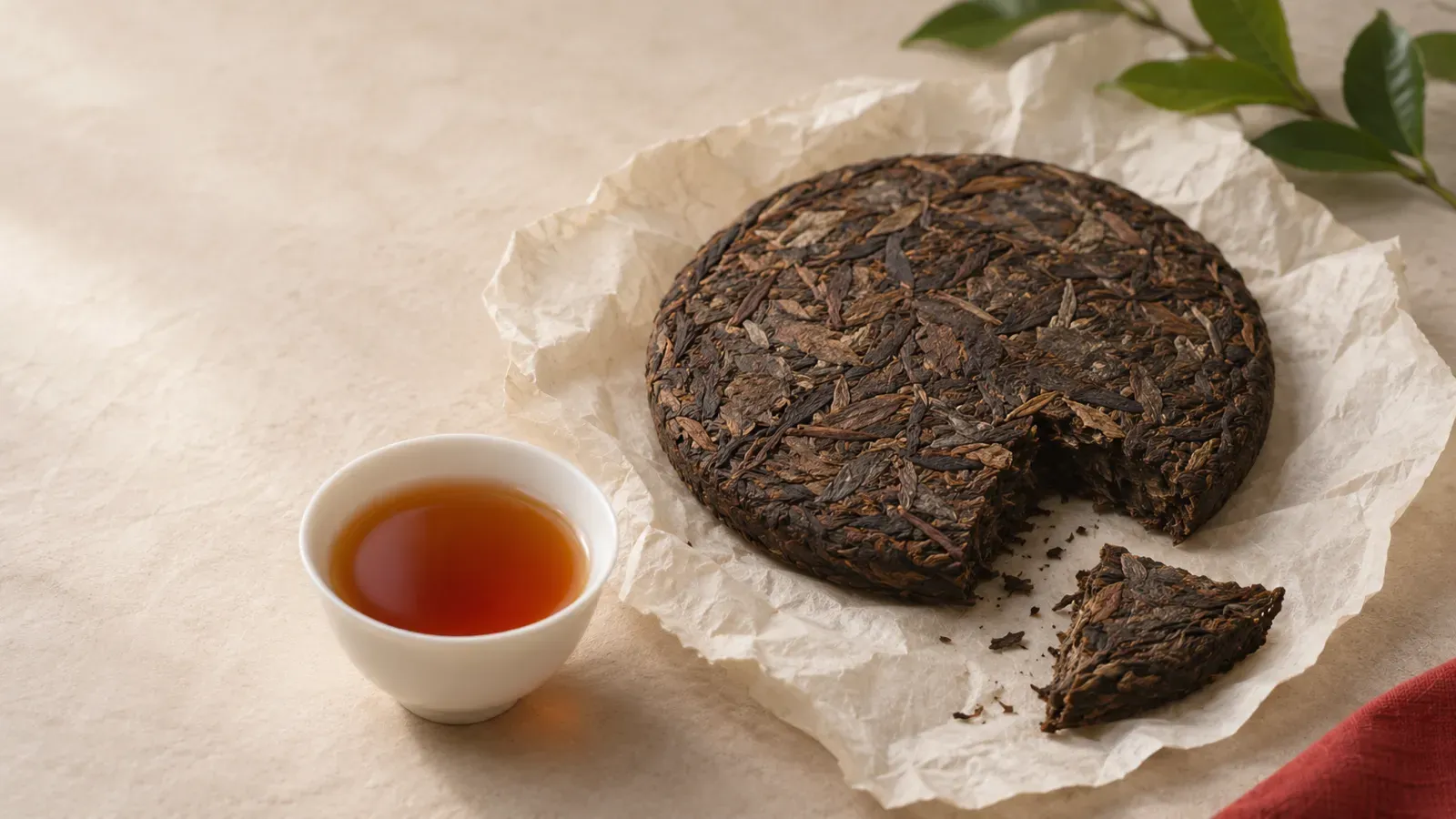
Pu'er (also written pu-erh, 普洱) is named after a town in southern Yunnan that was for a long time a market for the region's tea. It is one of the few teas that people store and age on purpose, and one of the few still commonly sold as a pressed cake instead of loose leaf.
Where does pu'er come from?
Pu'er comes from Yunnan, a mountainous province in south-west China that borders Myanmar, Laos and Vietnam. The main producing areas are in the south and south-west of the province, around Xishuangbanna, Pu'er city and Lincang.
The tea plant used is the large-leaf variety, Camellia sinensis var. assamica. Its leaves are bigger and thicker than those of the small-leaf bushes used for most Chinese green tea. In Yunnan the plants are often left to grow into trees, and some tea gardens are very old.
China's national standard for pu'er ties the name to place and material: the tea has to be made from Yunnan large-leaf sun-dried tea, inside a defined area of Yunnan. Tea made the same way elsewhere is not pu'er under that standard.
How is pu'er made?
All pu'er starts as a rough, loose tea called maocha (毛茶). In outline:
- Picking. Fresh leaves are picked, usually a bud with two or three leaves.
- Withering. The leaves are spread out for a few hours to lose some water.
- Pan-firing. The leaves are heated in a wok or a drum. This stops most of the oxidation that would otherwise turn them brown.
- Rolling. The leaves are rolled and twisted to bring the juices to the surface.
- Sun-drying. The leaves are dried in the sun, not in an oven. This step is what the standard means by "sun-dried tea".
From here the maocha goes one of two ways. It is either steamed and pressed as it is, which gives raw pu'er, or it is fermented in piles first, which gives ripe pu'er.
What are the two types of pu'er?
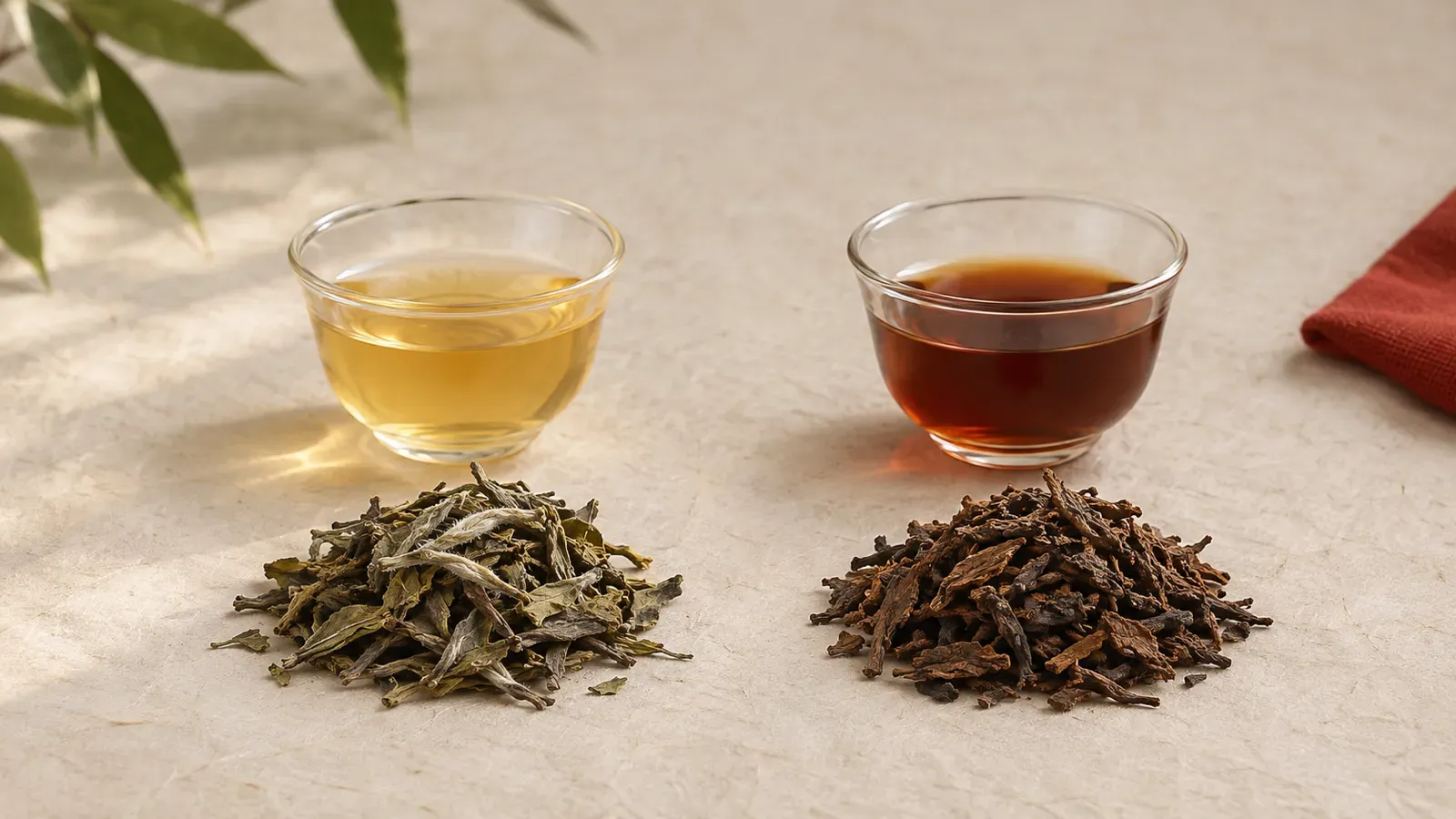
| Raw pu'er (sheng, 生茶) | Ripe pu'er (shou, 熟茶) | |
|---|---|---|
| Made from maocha by | Steaming and pressing, with no pile fermentation | Wet-piling (wo dui) for several weeks, then pressing or packing loose |
| Colour in the cup | Pale yellow to gold when young, darker with age | Dark red-brown |
| Taste | Fresh, floral, with some bitterness when young | Smooth, earthy, a little sweet |
| With age | Changes a great deal over many years | Ready to drink when made. Mainly gets smoother |
Raw pu'er is the older style. Ripe pu'er is a modern one: the wet-piling method was worked out in Yunnan in the 1970s.
Why is pu'er pressed into cakes?
The first reason is transport. For centuries tea left Yunnan on the backs of mules and horses, along the trade routes now called the Tea Horse Road. Pressed tea takes up far less room than loose leaf and survives a long journey better.
The second reason is storage. A cake is compact, easy to stack and wrap, and it changes slowly and evenly over the years.
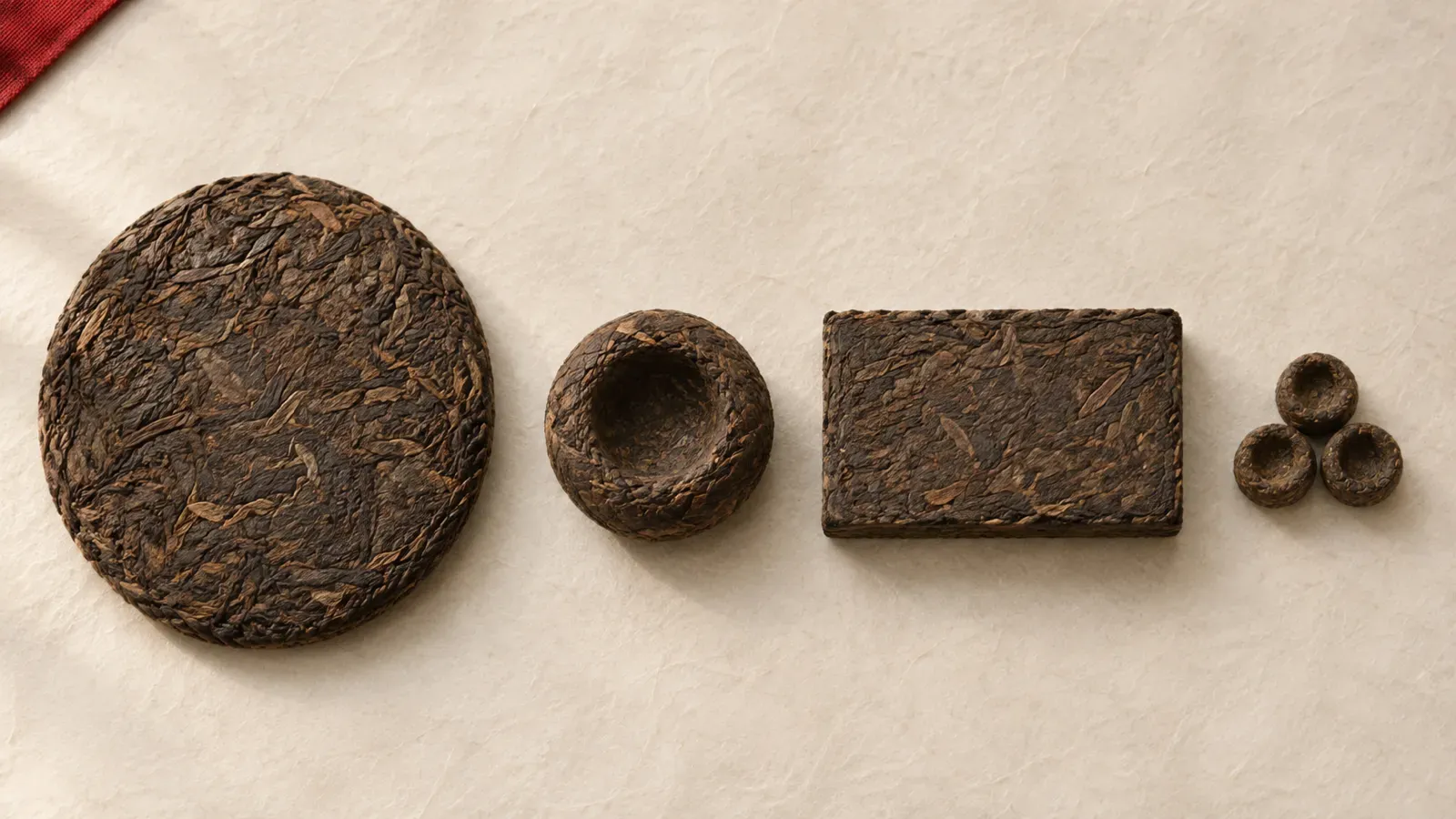
The most common shape is a round cake (bing, 饼), usually 357 grams, traditionally sold in stacks of seven wrapped in bamboo leaf. Pu'er is also pressed into bricks (zhuan), small bowl-shaped nests (tuo), and sold loose.
How is pu'er different from black tea and green tea?
| Tea | How the leaf is handled | Result |
|---|---|---|
| Green tea | Heated soon after picking, then dried with heat | Stays green. Meant to be drunk fresh, usually within a year or so |
| Black tea | Rolled and left to oxidise fully, then dried | Dark leaf, red liquor. The change is finished at the factory |
| Raw pu'er | Pan-fired, rolled, dried in the sun, pressed | Starts out close to a green tea, but keeps changing in storage |
| Ripe pu'er | The same sun-dried leaf, fermented in damp piles | Dark from fermentation by microbes, not from oxidation alone |
One naming point causes confusion. What English calls black tea is called red tea (hong cha, 红茶) in Chinese. In China, pu'er is usually grouped with a separate family called dark tea (hei cha, 黑茶), although some people argue that raw pu'er does not really fit that group. Either way, pu'er is not a black tea in the English sense.
How should a beginner start?
- Start with one of each. A ripe pu'er and a young raw pu'er taste so different that trying both is the quickest way to learn what you like.
- Ripe is the easier first cup. It is smooth and hard to get wrong, even with a long steep in a mug.
- Buy small at first. A sample, a small cake or a tuo is enough to find out. A full 357 gram cake lasts a long time.
- Use properly hot water. Boiling water for ripe pu'er, slightly cooler for young raw. Rinse the leaf once before the first cup.
- You do not need special teaware. A mug with an infuser or an ordinary teapot works.