 Chama Cellar
Gongfu brewing (工夫茶, also written 功夫茶) means making tea with care in a small vessel. The leaf-to-water ratio is high and each infusion is short. Instead of one large cup you get many small ones, and you can taste how the tea changes as the leaf opens.
What equipment do you need?
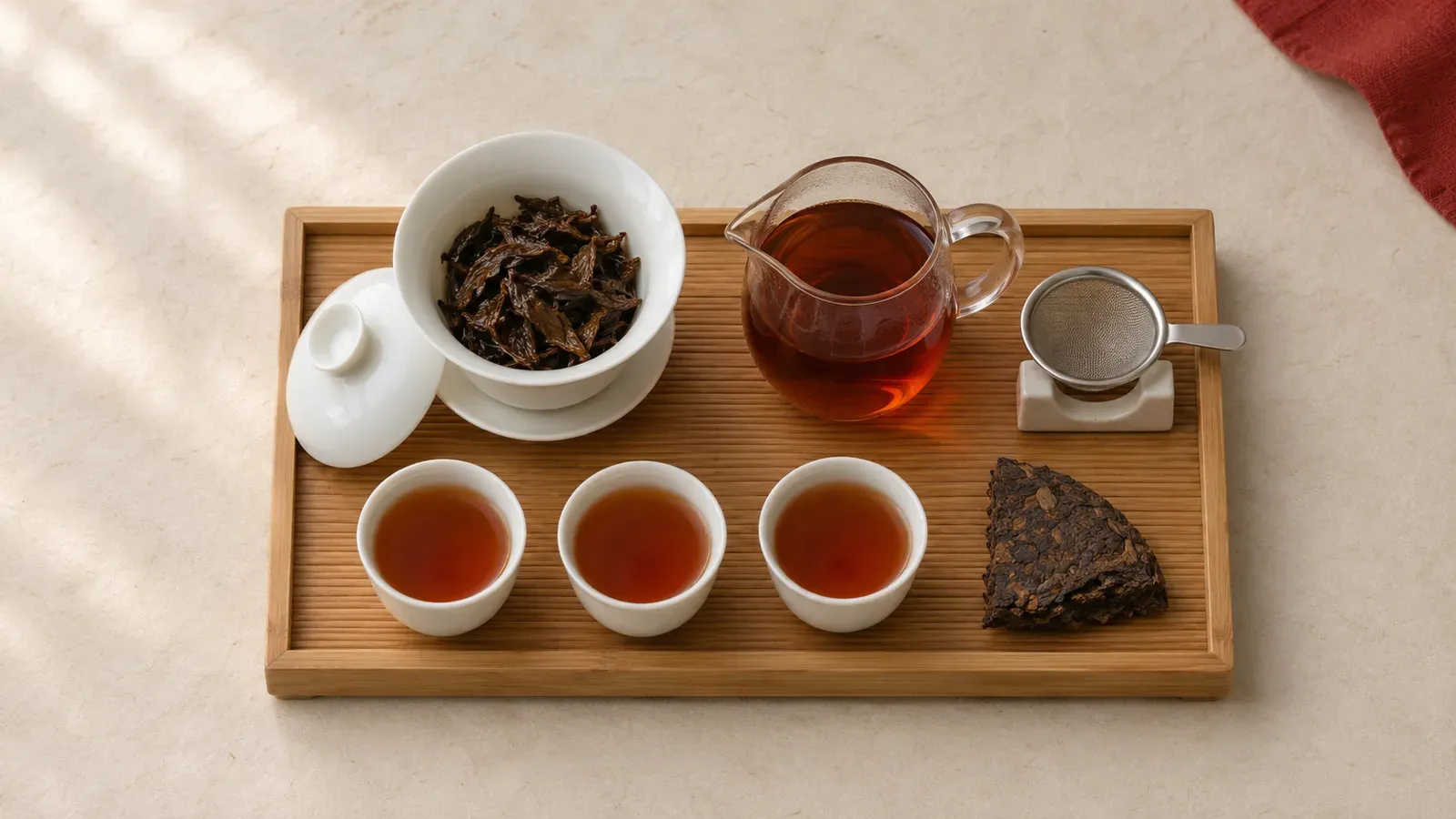
- A gaiwan (盖碗). A lidded bowl, usually porcelain, of about 100–120 ml. Porcelain does not hold on to flavours, so one gaiwan serves every tea.
- A fairness pitcher (公道杯, gōng dào bēi). Each infusion is poured into it in one go. That stops the steeping and gives every cup the same strength.
- A strainer. It sits on the pitcher and catches broken leaf.
- Small cups. Around 30–50 ml each.
- A kettle, a scale and a bowl for waste water. A tea tray is nice to have, but a bowl does the same job.
A mug can stand in for the pitcher and any small cups will do. The gaiwan is the one piece worth buying.
How much leaf for how much water?
A common starting point is about 1 gram of leaf per 15–20 ml of water. For a 100–120 ml gaiwan that is 5–7 grams.
Two practical notes. The size printed on a gaiwan is usually measured to the brim, and you will fill it lower than that, so measure what yours really holds once. And if young raw pu'er tastes too sharp at this ratio, drop to about 1 gram per 20–25 ml before changing anything else.
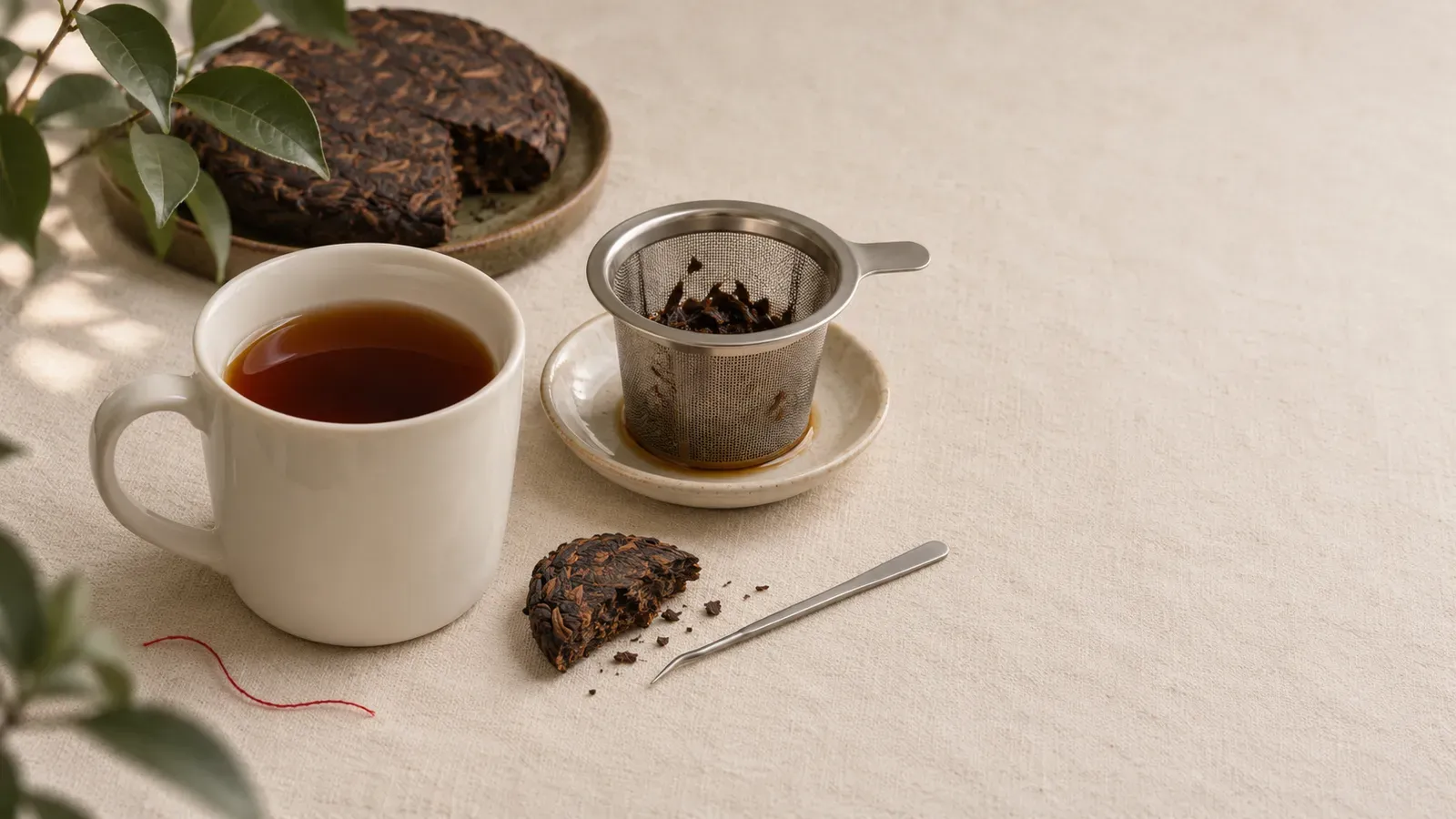
Break the cake into thin flakes, not crumbs. A mix of small and medium pieces opens evenly.
How do you brew it, step by step?
- Warm everything. Pour boiling water into the gaiwan, then into the pitcher and cups, and discard it.
- Add the leaf. Smell it in the warm gaiwan. This is often the clearest the dry aroma gets.
- Rinse. Pour on hot water, wait five to ten seconds and pour it away. Very tight or aged tea often gets a second rinse.
- Infuse. Pour water down the side of the gaiwan, not straight onto the leaf, up to just below where the lid sits. Put the lid on and count.
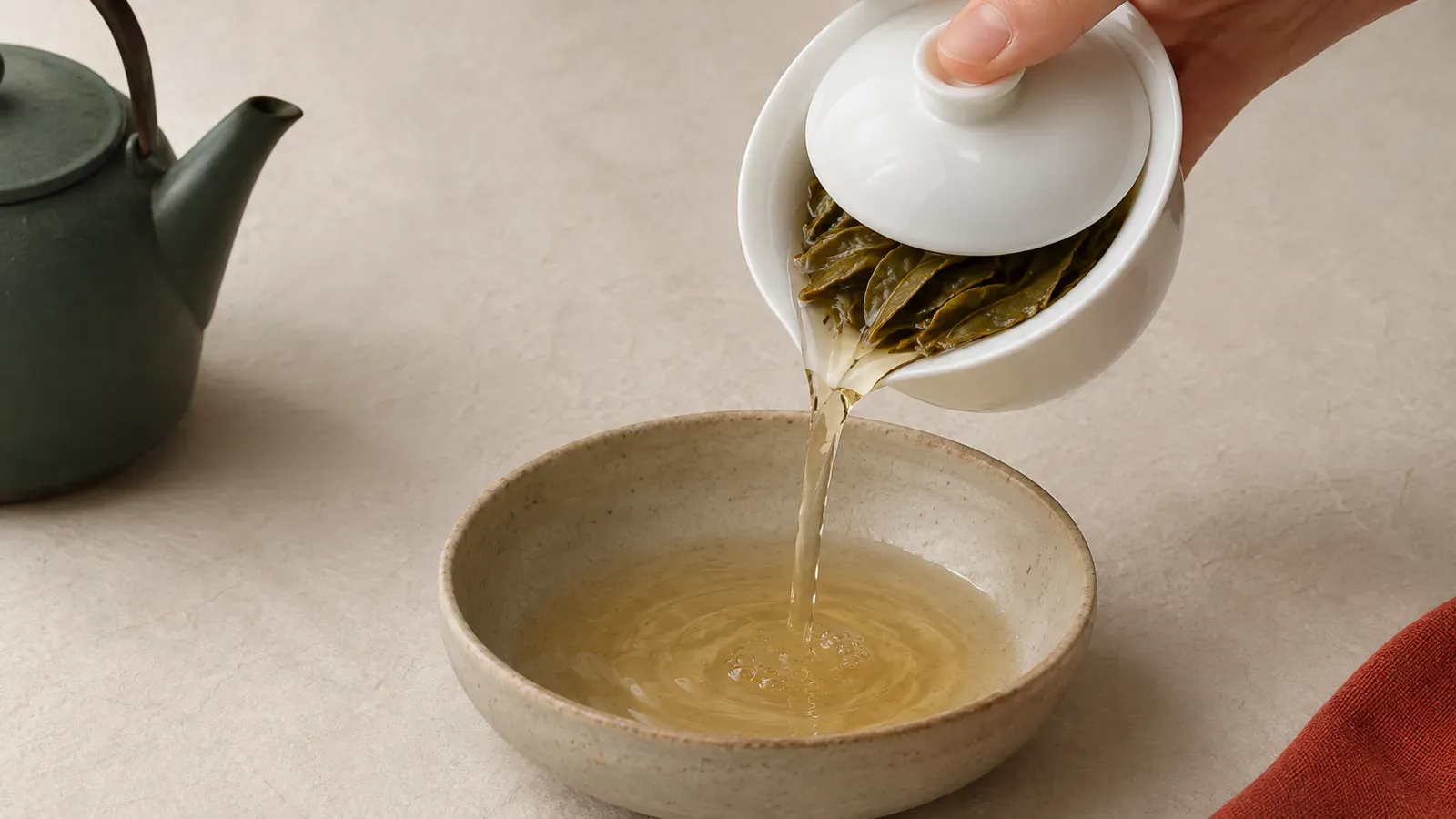
- Pour out. Slide the lid back to leave a narrow gap. Hold the rim with thumb and middle finger, rest the index finger on the knob, and tip everything into the pitcher through the strainer.
- Leave the lid ajar between infusions so the leaf does not stew in its own steam.
- Serve from the pitcher, then repeat with a slightly longer steep.
How long should each infusion be?
| Infusion | Ripe pu'er | Raw pu'er |
|---|---|---|
| Water | 100°C / 212°F | 90–95°C when young, hotter as it ages |
| Rinse | 5–10 seconds, once or twice | About 5 seconds, once |
| 1–3 | 10–15 seconds | 5–10 seconds |
| 4–6 | 15–25 seconds | 10–20 seconds |
| 7–9 | 30–60 seconds | 20–45 seconds |
| 10 and after | 1–3 minutes | 1–2 minutes |
Treat these as starting points and let the last cup decide the next one. If it was too strong, shorten the next steep. If it was thin, lengthen it.
The count includes pouring. Filling and emptying a gaiwan takes several seconds, and the leaf is steeping the whole time.
Compressed pieces usually open fully around the third or fourth infusion. The tea can suddenly get stronger at that point, so hold the time steady or even shorten it for a round.
How many infusions should you expect?
Roughly eight to twelve from 5–7 grams, depending on the leaf and on how tightly it was pressed. Some teas, often aged ones, keep going well beyond that. Broken leaf and small tea-bag grades give up their flavour in far fewer rounds.
The tea is finished when a long steep still comes out pale and watery. Many people end with one last steep of several minutes to get what is left.
What are the common mistakes?
- Not emptying the gaiwan. Any liquid left behind keeps steeping and makes the next round bitter.
- Starting too long. With this much leaf, thirty seconds on the first infusion is already a lot.
- Letting the water cool. Ripe and aged pu'er go flat with cooling water. Reboil the kettle every few rounds.
- Overfilling. Water above the lid line heats the rim and burns your fingers. Fill lower and hold only the flared edge.
- Pouring slowly. A slow pour adds seconds to every infusion. Tip decisively.
- Too much dust. Crumbled leaf makes a strong, muddy first few cups and then fades.
Is a gaiwan better than a clay teapot?
Neither is better. A gaiwan is neutral, quick to pour and easy to clean, which makes it the easier vessel to learn on. A small unglazed clay pot holds heat well, and many drinkers like it for ripe and aged pu'er. Unglazed clay takes on some of the tea it is used with, so people usually keep one pot for one kind of tea.