 Chama Cellar
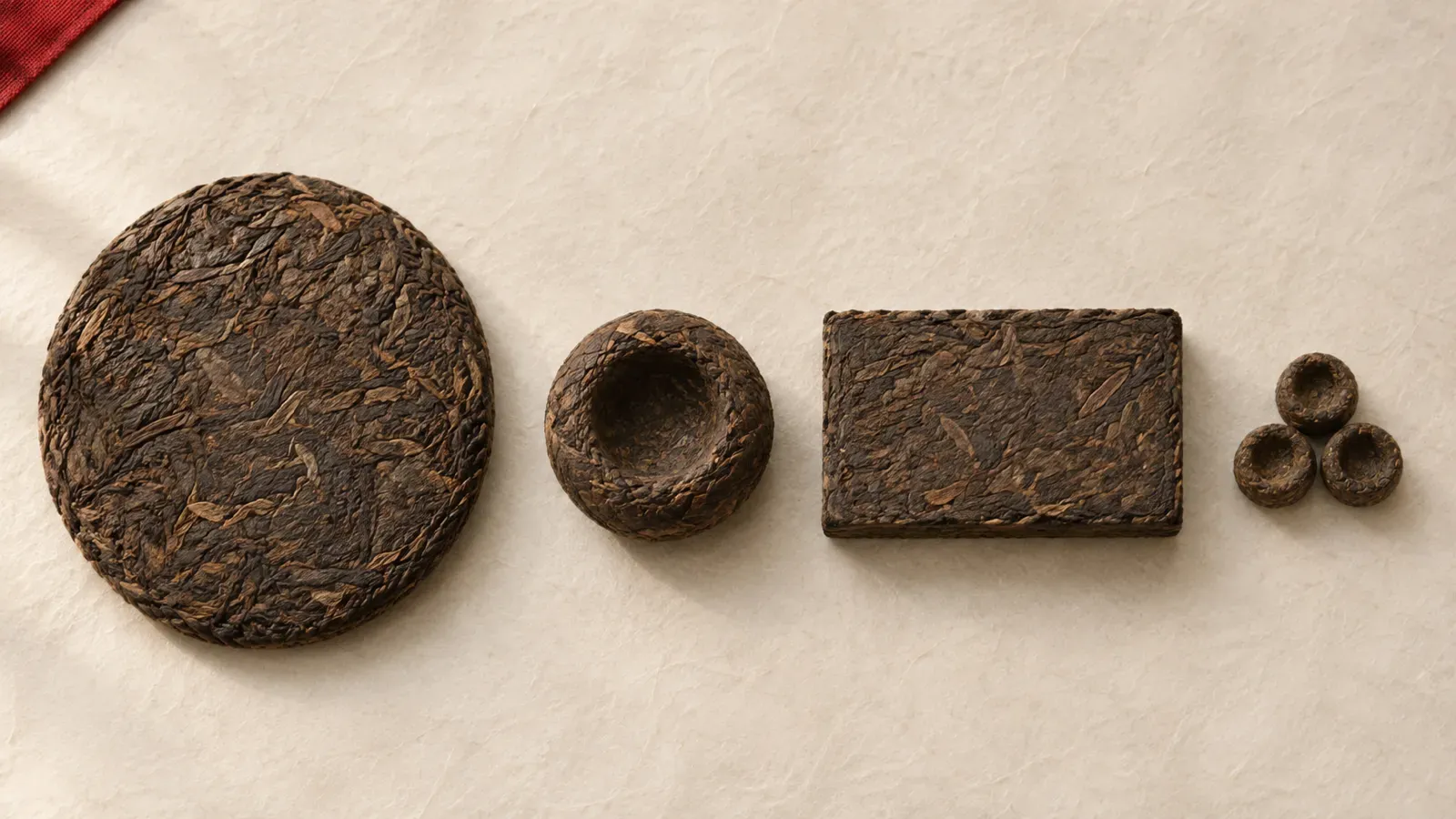
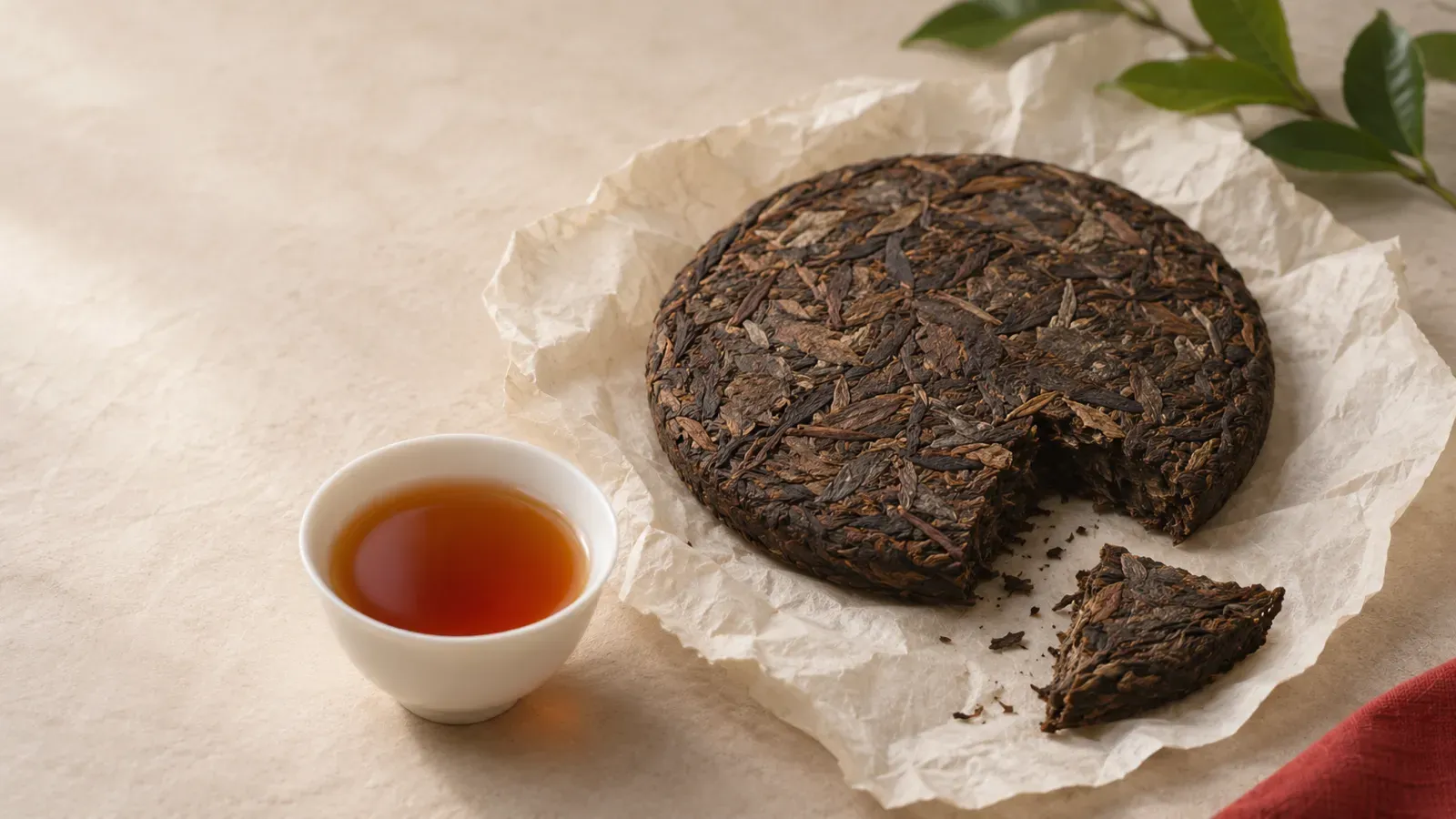
Most pu'er is sold pressed. The shape tells you little about quality, but it does affect how the tea ages, how you break it up and how it was meant to be carried.
Why was pu'er pressed in the first place?
Loose sun-dried leaf takes up a lot of room and crumbles when it is handled. Yunnan's tea had to travel a long way, to Tibet, to the rest of China and to Southeast Asia, much of it on mules and on people's backs. Pressing solved several problems at once:
- Volume. A pressed cake takes a fraction of the space of the same weight of loose leaf.
- Damage. A hard cake does not break into dust on a mountain track.
- Counting. Pieces of a fixed weight are easy to count, trade and tax.
- Keeping. Less of the leaf is exposed to air, so the tea changes slowly and holds its aroma.
The method has changed little. The loose tea is weighed, steamed until soft, shaped in a cloth bag, pressed under a stone or in a machine, and then dried.
What are the main shapes and weights?
| Shape | Chinese name | Typical weight | Notes |
|---|---|---|---|
| Cake | bing cha, 饼茶 | 357 g is the standard. 100 g, 200 g, 250 g, 400 g and 500 g are also made | Flat disc. The most common shape for both raw and ripe pu'er |
| Tuo | tuo cha, 沱茶 | 100 g and 250 g | A bowl or nest shape with a hollow underneath. Usually pressed tight |
| Mini tuo | xiao tuo, 小沱 | Roughly 3–5 g | One piece per brew. Mostly ripe pu'er |
| Brick | zhuan cha, 砖茶 | 250 g is common. 100 g, 500 g and 1 kg exist | Rectangular. Stacks and packs neatly |
| Mushroom | jin cha, 紧茶 | Usually 250 g | A rounded head on a short stalk. Made mainly for the Tibetan market |
| Melon | jin gua, 金瓜 | From about 100 g to several kilograms | Pumpkin-shaped with grooves. Linked to the tribute tea of the Qing court |
| Dragon ball | long zhu, 龙珠 | Roughly 5–8 g | A hand-rolled ball for a single brew |
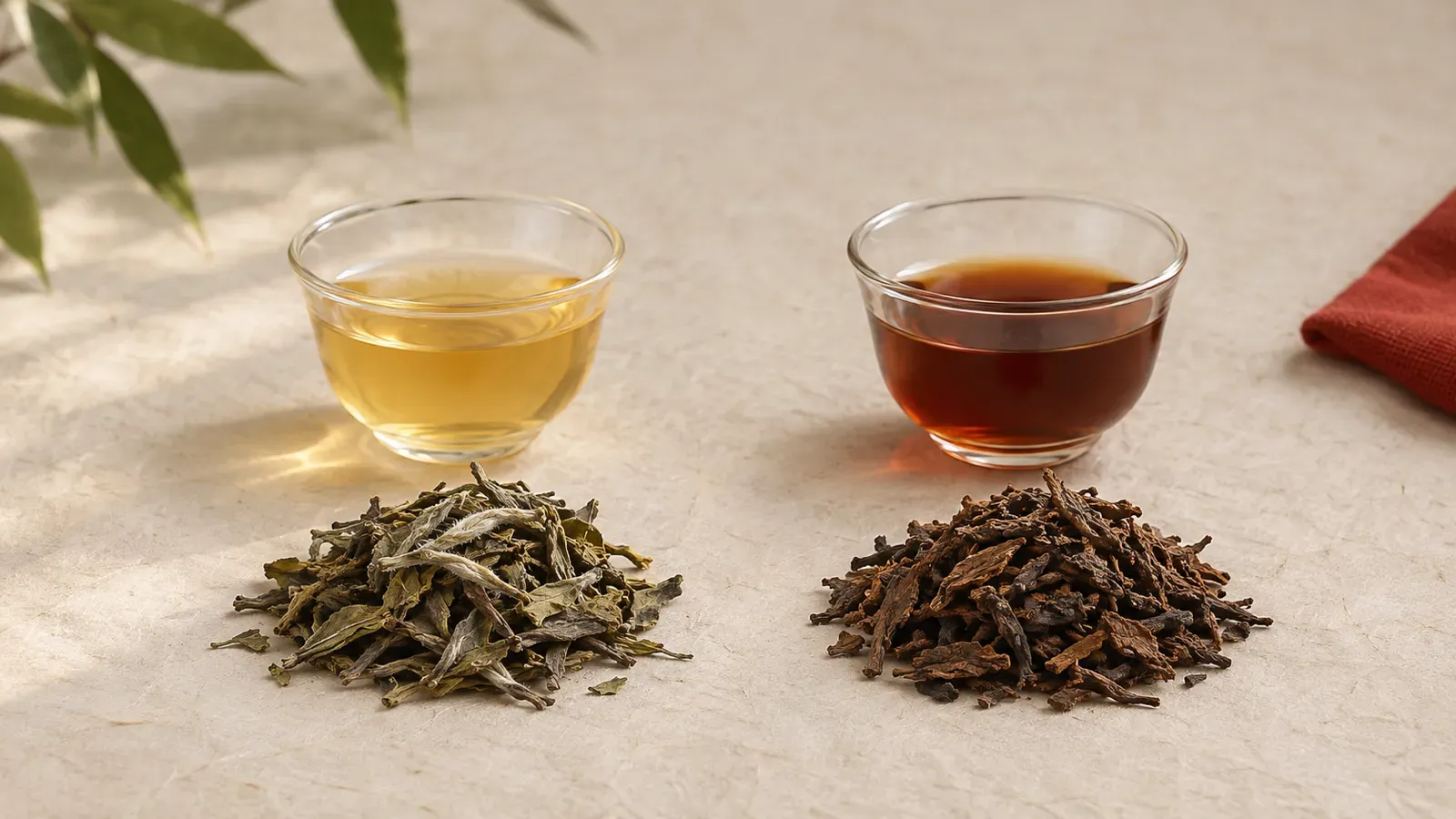
| Loose leaf | san cha, 散茶 | Sold by weight | Not pressed at all. Common for ripe pu'er and for graded leaf |
These are typical figures. Factories make many other sizes.
Why does a standard cake weigh 357 g?
Nobody can point to one documented reason. The explanation heard most often is arithmetic. Seven cakes of 357 g weigh almost exactly 2.5 kg. Seven cakes make one stack, called a tong, and twelve tongs make a 30 kg case, a convenient unit for export. Divide 30 kg by 84 cakes and you get roughly 357 g.
A second explanation looks further back. A Qing dynasty regulation is often quoted as fixing Yunnan tea at seven round cakes to a tube, so the number seven is old even if the gram weight is modern. Seven is also a number associated with many children and good fortune, which is the usual reading of the name qi zi bing, "seven sons cake". That name is generally said to have come into use with the export trade in the 1970s. Before that the shape was simply called round tea.
Treat all of this as trade lore with some support, not as settled history. What is certain is that 357 g, seven to a tong, is still the default today. A tong was traditionally wrapped in bamboo shoot husk. Many are now wrapped in paper.
How does tight pressing change ageing?
The tighter the tea, the slower it changes.
- Tightly pressed tea, such as most tuo, many bricks and the machine-pressed "iron cakes", lets very little air into the middle. It ages slowly and keeps its aroma for a long time. The centre of a tight cake can still taste young when the edge has moved on.
- Stone-pressed cakes are looser, especially at the rim. Air gets in more easily, and they change faster and more evenly.
- Loose leaf changes fastest. It also loses aroma sooner, takes more space and picks up outside smells more readily.
None of these is better in itself. Someone who wants to drink a raw pu'er within a few years may prefer a looser cake. Someone putting tea away for a long time may be happy with a tight one.
How does it change brewing?
A loosely pressed cake comes apart in layers with a tea pick, and the leaves open after one quick rinse. A tight tuo or iron cake is harder work. Pry from the edge or from the hollow, work along the layers and try not to snap the leaves, because broken leaf brews stronger and more bitter. Tight pieces also open slowly. The first infusions can be thin and the later ones suddenly strong, so a slightly longer rinse helps. Mini tuo and dragon balls go into the pot whole and need a minute or so to loosen.
Does the shape tell you anything about quality?
Not reliably. Any grade of leaf can be pressed into any shape. As a broad habit, cakes are where producers put whole, good-looking leaf, because the face of a cake shows it off. Small tuo and bricks have often been made from smaller or more broken grades. There are many exceptions in both directions, so judge the tea and not the mould it was pressed in.