 Chama Cellar
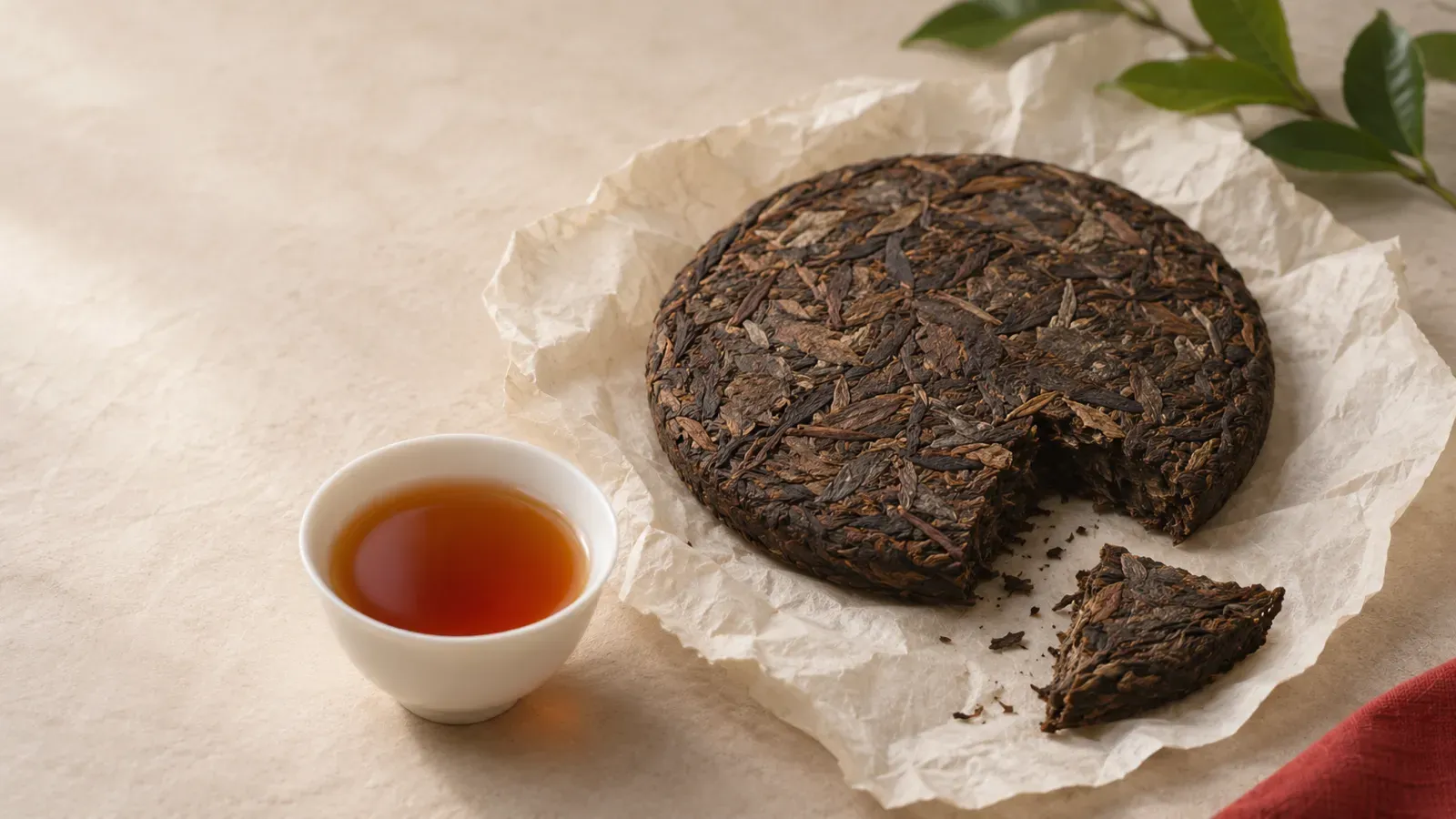
The two types of pu'er look alike in their wrappers and taste almost nothing alike in the cup. The difference comes down to one extra step in the factory.
What do raw and ripe pu'er have in common?
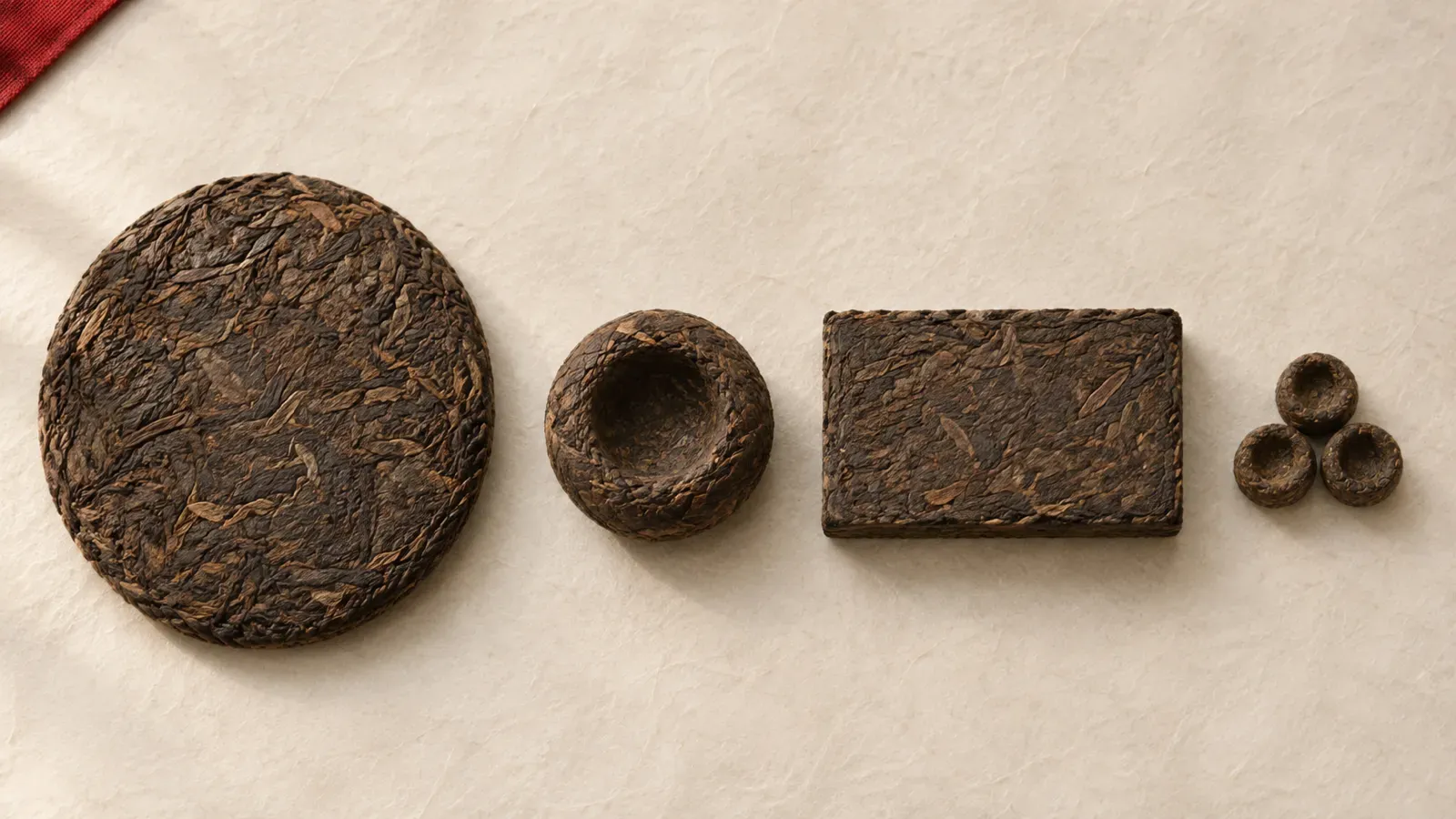
Both begin as maocha (毛茶): leaves of the Yunnan large-leaf tea plant that have been pan-fired, rolled and dried in the sun. Both are usually steamed and pressed into cakes, bricks or tuo. Both can be stored for years, and both are brewed with very hot water.
How is raw pu'er made?
Raw pu'er (sheng, 生茶) is the simpler of the two. The maocha is sorted, steamed for a short time to soften it, pressed into shape and left to dry. Nothing else is done to it.
A new raw cake is therefore close to a sun-dried green tea. What makes it pu'er is what happens afterwards. Kept in its wrapper for years, the tea slowly darkens and its taste becomes deeper and rounder. This slow change is why people talk about the age of a raw pu'er.
How is ripe pu'er made?
Ripe pu'er (shou, 熟茶) goes through wet-piling, called wo dui (渥堆) in Chinese. In outline:
- Maocha is heaped into a large pile on the factory floor.
- The pile is sprayed with water and covered.
- Microbes on the leaf get to work and the pile heats up from the inside.
- Workers turn the pile every so often so that it ferments evenly and does not overheat.
- After several weeks the tea is spread out to dry, then sorted and either pressed or sold loose.
The length of the piling varies with the factory, the leaf and the weather. Figures of roughly 40 to 60 days are the ones most often quoted.
When was ripe pu'er invented?
Ripe pu'er is recent. The wet-piling method was developed at state tea factories in Yunnan in the early 1970s. The date most often quoted is 1973, at the Kunming Tea Factory, with the Menghai Tea Factory closely involved in the same years. Large-scale production followed around the middle of the decade. Sources differ on the exact dates and on who deserves the credit.
The aim was practical. Aged raw pu'er was in demand, and waiting many years for it was slow. Wet-piling gave a dark, smooth tea in weeks. It did not produce a copy of aged raw pu'er, though. It produced a different tea with its own character.
How do raw and ripe pu'er compare?
| Raw pu'er (sheng) | Ripe pu'er (shou) | |
|---|---|---|
| Chinese name | 生茶, sometimes 青饼 for a cake | 熟茶, sometimes 熟饼 for a cake |
| Extra step after maocha | None | Wet-piling (wo dui) for several weeks |
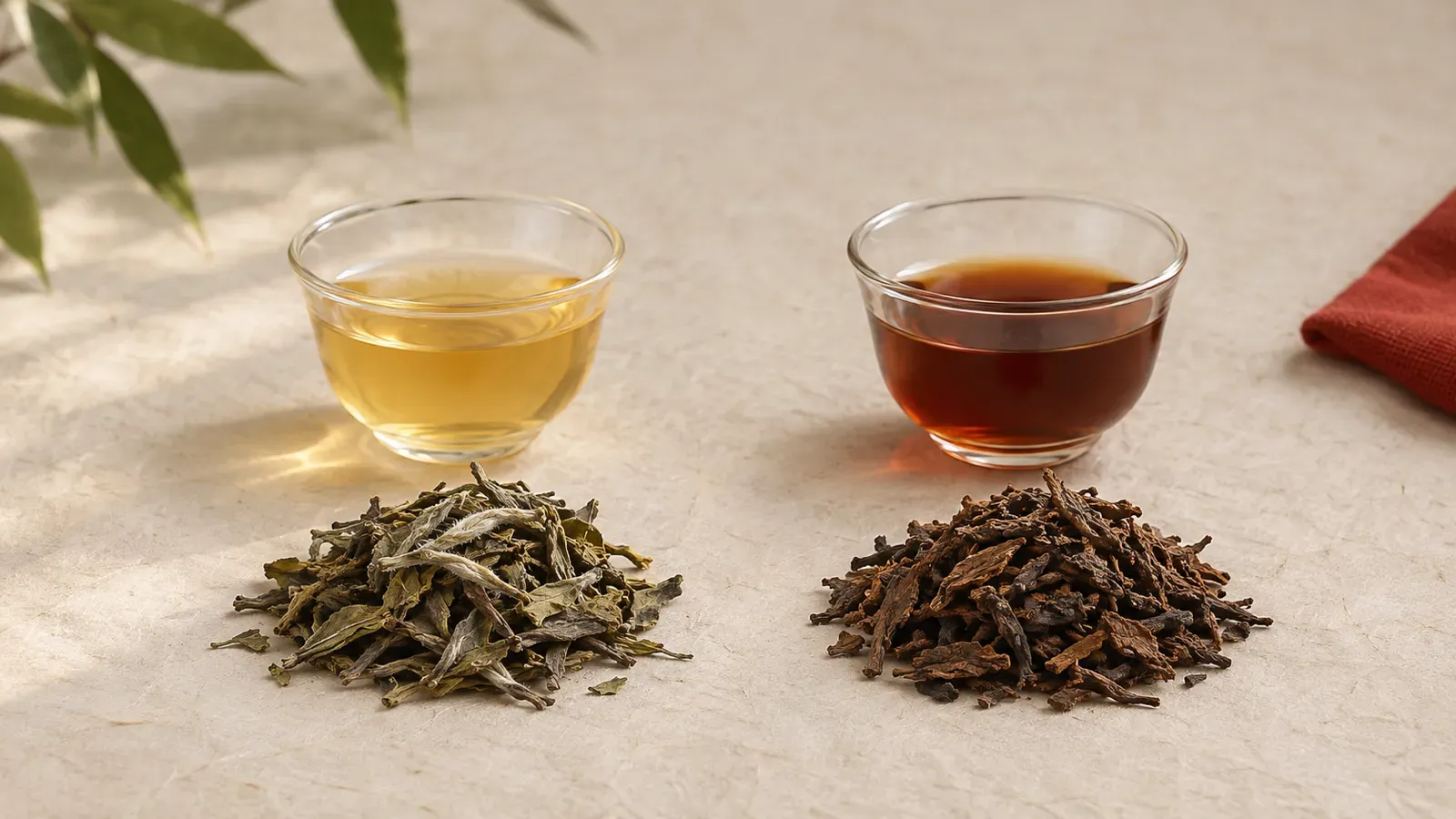
| Dry leaf | Dark green to olive, with silvery buds. Browner with age | Dark brown to red-brown, with golden-brown buds |
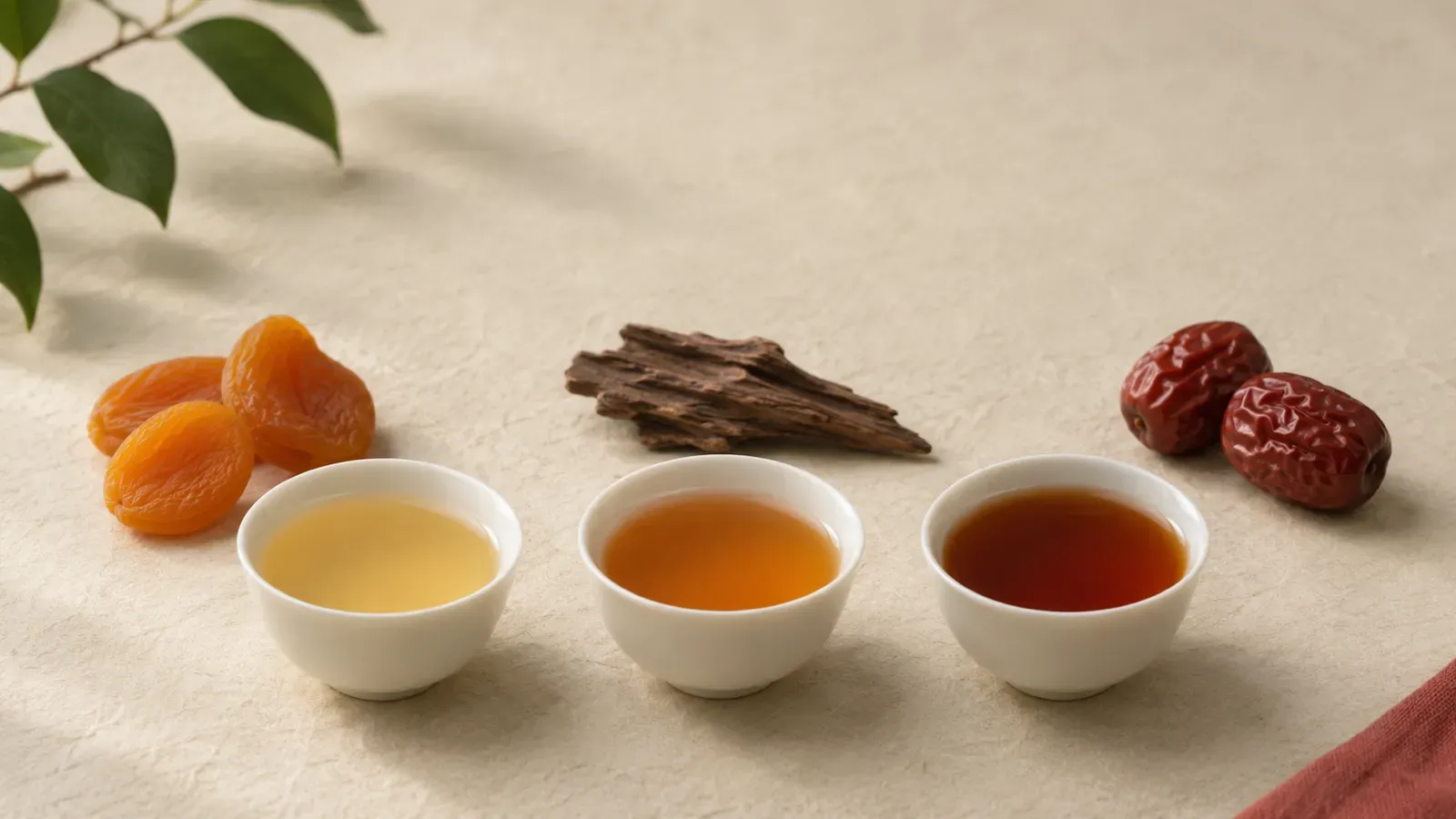
| Liquor | Pale yellow to gold when young. Orange to red-brown when aged | Deep red-brown, sometimes nearly opaque |
| Aroma | Floral, grassy, fruity when young | Earthy, woody, sweet |
| Taste | Bright, some bitterness and astringency, a sweet aftertaste | Smooth, thick, low in bitterness |
| Ageing | Changes a great deal over many years | Ready to drink. Gets smoother and cleaner over its first few years |
| Brewing | Slightly cooler water and short steeps for young tea | Boiling water. Tolerates long steeps |
Do they taste different?
Very. A young raw pu'er is lively and sharp. It can smell of flowers, fresh hay or stone fruit, and it usually has a bitter edge that turns sweet in the throat after you swallow. Brewed too strong, it is harsh.
A ripe pu'er is dark and soft. The usual comparisons are damp earth, wood, dates and cocoa. It has little bitterness, and it is hard to over-steep. A newly made ripe tea can carry a pile smell from the fermentation, which usually fades as the tea airs.
Aged raw pu'er sits somewhere else again. It is darker and smoother than young raw, but it tends to keep more liveliness than ripe tea.
How do they age?
Raw pu'er is the one that ages in the full sense. Over five, ten or twenty years, depending on the storage, the bitterness softens and the fresh notes give way to deeper ones.
Ripe pu'er has already done most of its changing in the pile. In storage it mainly loses any leftover pile smell and becomes smoother. It does not need to be aged before drinking.
Store the two types apart. Ripe pu'er has a strong aroma that raw pu'er will absorb.
Which should you try first?
- If you like dark, smooth drinks such as black tea or coffee, start with ripe pu'er.
- If you like green tea or light oolong, a young raw pu'er will feel more familiar. Brew it with a light hand.
- If you are not sure, buy a small amount of each and brew them side by side. Most people have a clear preference after one sitting.
Neither type is the "real" one or the better one. They are two styles from the same leaf.