 Chama Cellar
A first pu'er order goes wrong in two usual ways. People buy a whole cake of something they turn out not to like, or they pay extra for a name or an age they cannot yet taste. Both are easy to avoid.
Should you start with ripe or raw pu'er?
Most people find ripe pu'er (shou, 熟茶) the easier start. It is dark, smooth and earthy, has very little bitterness, and is hard to spoil in brewing. Boiling water and a slightly long steep still give a drinkable cup.
Raw pu'er (sheng, 生茶) is the other half of the category. A young raw cake is closer to a strong green tea: fresh, sometimes floral, with clear bitterness and some astringency. It punishes water that is too hot or a steep that runs too long.
The two taste so different that liking one says little about the other. The practical answer is to try both, and to let ripe be the larger share of the first order.
| Ripe (shou) | Young raw (sheng) | |
|---|---|---|
| Taste | Smooth, earthy, woody | Fresh, bitter-sweet, sometimes floral |
| Colour in the cup | Dark red-brown | Pale yellow to gold |
| Brewing | Forgiving | Needs shorter steeps and more care |
| As a first tea | Easy for most people | Better as a second sample |
Why buy samples before a whole cake?
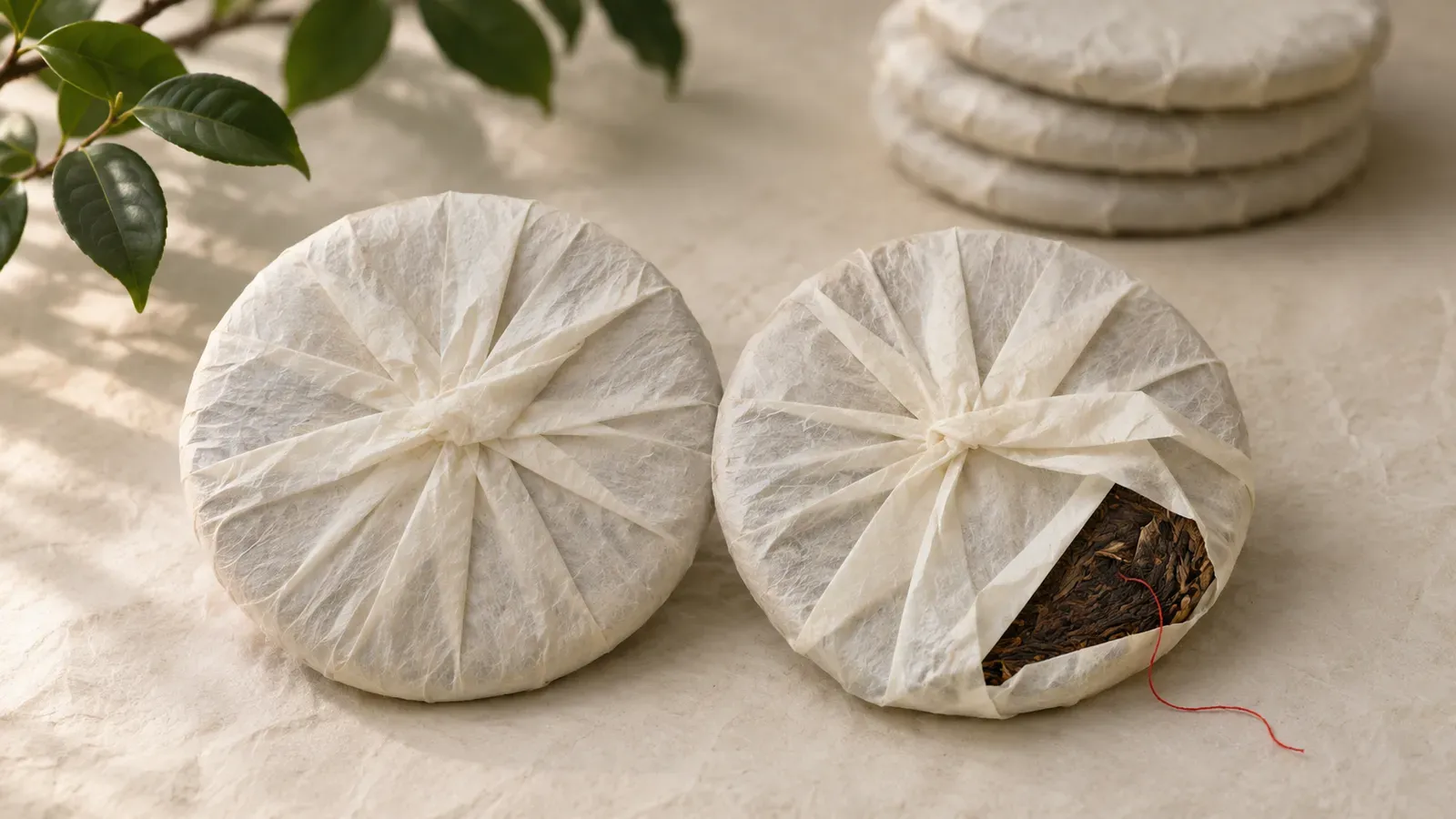
A standard cake weighs 357 grams. At five to eight grams a session, that is around fifty sessions of one tea. If you do not like it, that is a lot of tea to own.
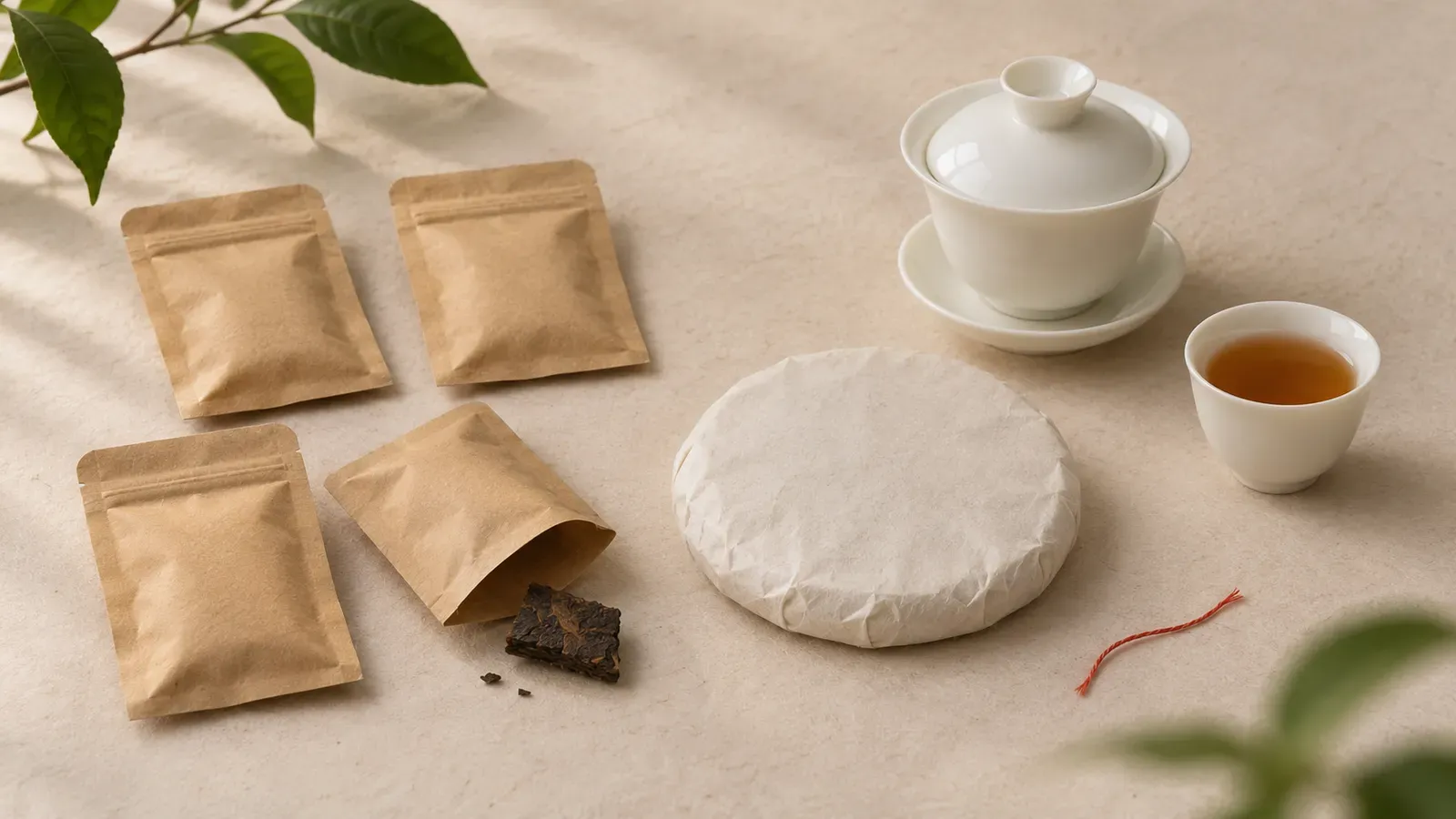
Many sellers offer samples, commonly somewhere between 10 and 50 grams, cut from the same cake. A sample of 25 grams is enough for three or four sessions, which is enough to find out whether you want more. Brew it more than once before deciding, because the first session with an unfamiliar tea is rarely the best one.
If a seller has no samples, look for small formats instead: 100 or 200 gram cakes, small tuocha, or loose-leaf ripe pu'er.
A sensible first order is three or four samples: two ripe teas from different factories or years, one young raw, and perhaps one raw with some age on it.
What age should a first pu'er be?
- Ripe pu'er: roughly two to ten years since pressing. A brand-new ripe tea often carries a fermentation smell, called 堆味 (duī wèi), that fades over the first year or two. After that the tea is settled. Much older ripe tea costs more without being a clearer lesson for a beginner.
- Raw pu'er: from the last few years, or about ten years old if the price is reasonable. A young raw tea shows you what raw pu'er starts as. One with around a decade of clean storage shows you where it goes. You do not need anything older than that to begin with.
These are starting ranges, not rules. With any tea older than a few years, where it was stored matters as much as how old it is, so ask.
What should a beginner avoid?
- Famous village names. Names such as Lao Banzhang and Bingdao appear on far more tea than those villages can grow. The real thing is very expensive, and a beginner has no reference point to judge it against.
- Very old tea. Cakes sold as twenty or thirty years old are the most often misdescribed, and the storage decides whether they are good at all. Learn what clean five- and ten-year-old tea tastes like first.
- Very cheap "ancient tree" tea. Leaf from old trees is scarce and costs many times more than plantation leaf. A bargain cake labelled gushu (古树) is almost always ordinary plantation tea with an ambitious wrapper. It may still be pleasant to drink, but you are not getting what the label says.
- A full stack as a first purchase. Seven cakes in a bamboo-leaf bundle, called a tong, is how collectors buy. It is not how to find out what you like.
- Tea bought as an investment. Buy tea to drink. Whether a cake gains value depends on brand, storage and a market that beginners cannot read.
- Listings with a story in place of details. A useful listing states the type, the year, the factory or producer and where the tea has been stored.
What equipment do you need?
Very little.
- A kettle. Pu'er needs water at or near boiling.
- Something to brew in. A gaiwan of about 100 to 150 ml is the usual tool and costs little. A mug with a basket infuser or a small teapot with a strainer also works.
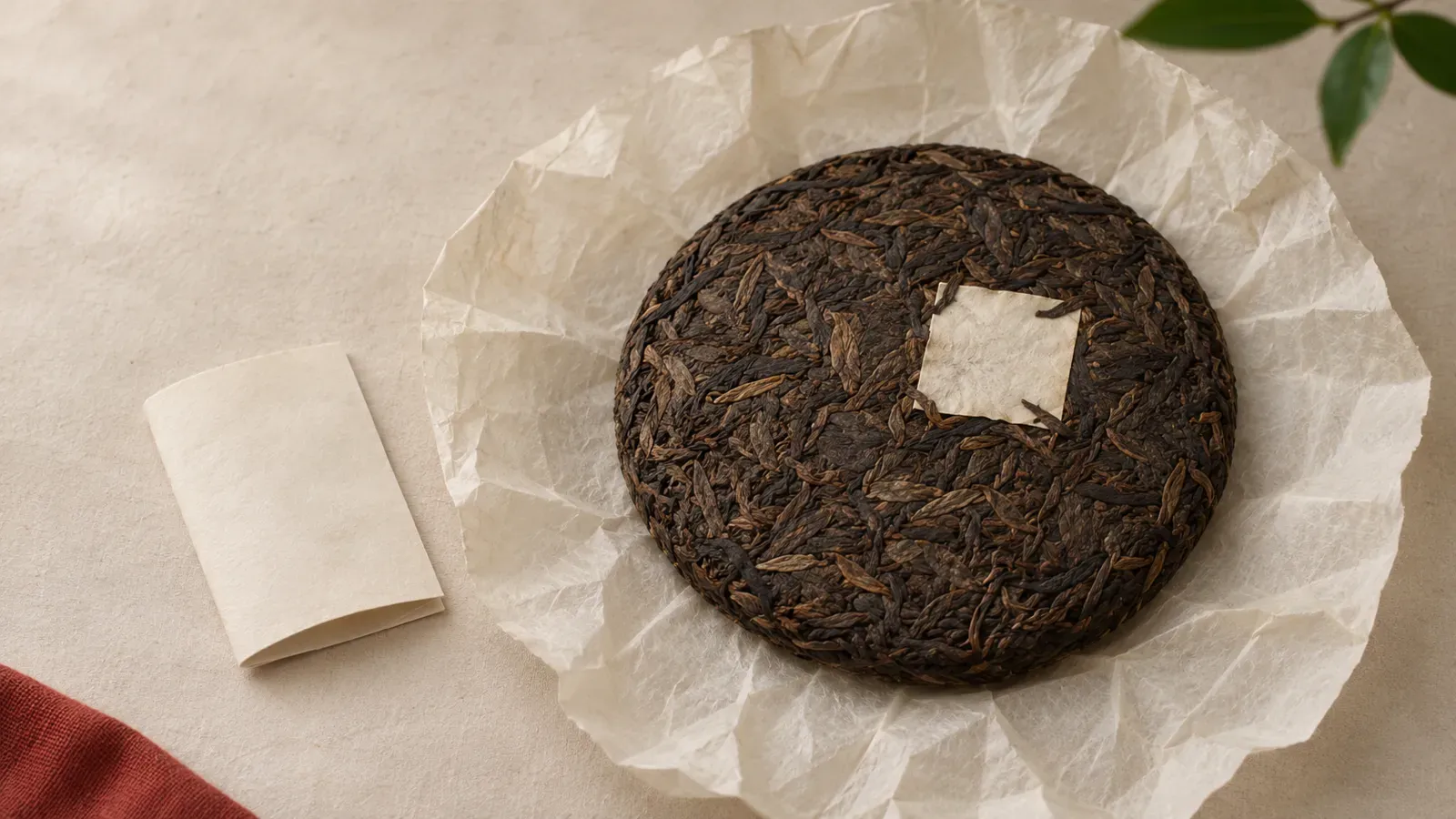
- Something to open a cake with. A pu'er pick or knife is made for the job. A blunt butter knife will do. Work it in from the edge and lever off flakes instead of chopping.
- A kitchen scale, if you have one. Weighing five to eight grams takes the guesswork out of the first few sessions.
You do not need a clay teapot, a tea tray or special storage to begin with. Keep the tea in its paper wrapper, in a clean cupboard away from kitchen smells, strong light and damp.
What should you do after the first few teas?
Drink each sample at least twice and write one line about it: what it was, and whether you would drink it again. After three or four teas you will know whether you lean towards ripe or raw, and towards younger or older tea. Then buy one cake of the tea you kept wanting to go back to. Leave regions, single villages and old trees for later, when you have something to compare them with.