 Chama Cellar
Cold brewing means steeping tea in cold water for hours, with no heat doing the work. It is the slowest way to make pu'er and also the most forgiving: a bottle, a fridge and some patience are all it takes. The result is a different drink from the hot one, and it is worth knowing how before you start.
How do you cold brew pu'er, step by step?
- Break the tea into thin flakes. Cold water opens compressed leaf slowly. A solid lump can sit in the fridge all night and stay dry in the middle.
- Weigh the leaf. About 8–10 g per litre is a common starting point, so 4–5 g for a 500 ml bottle. Practice varies, and the right amount depends on the tea and on your taste. Adjust after the first batch.
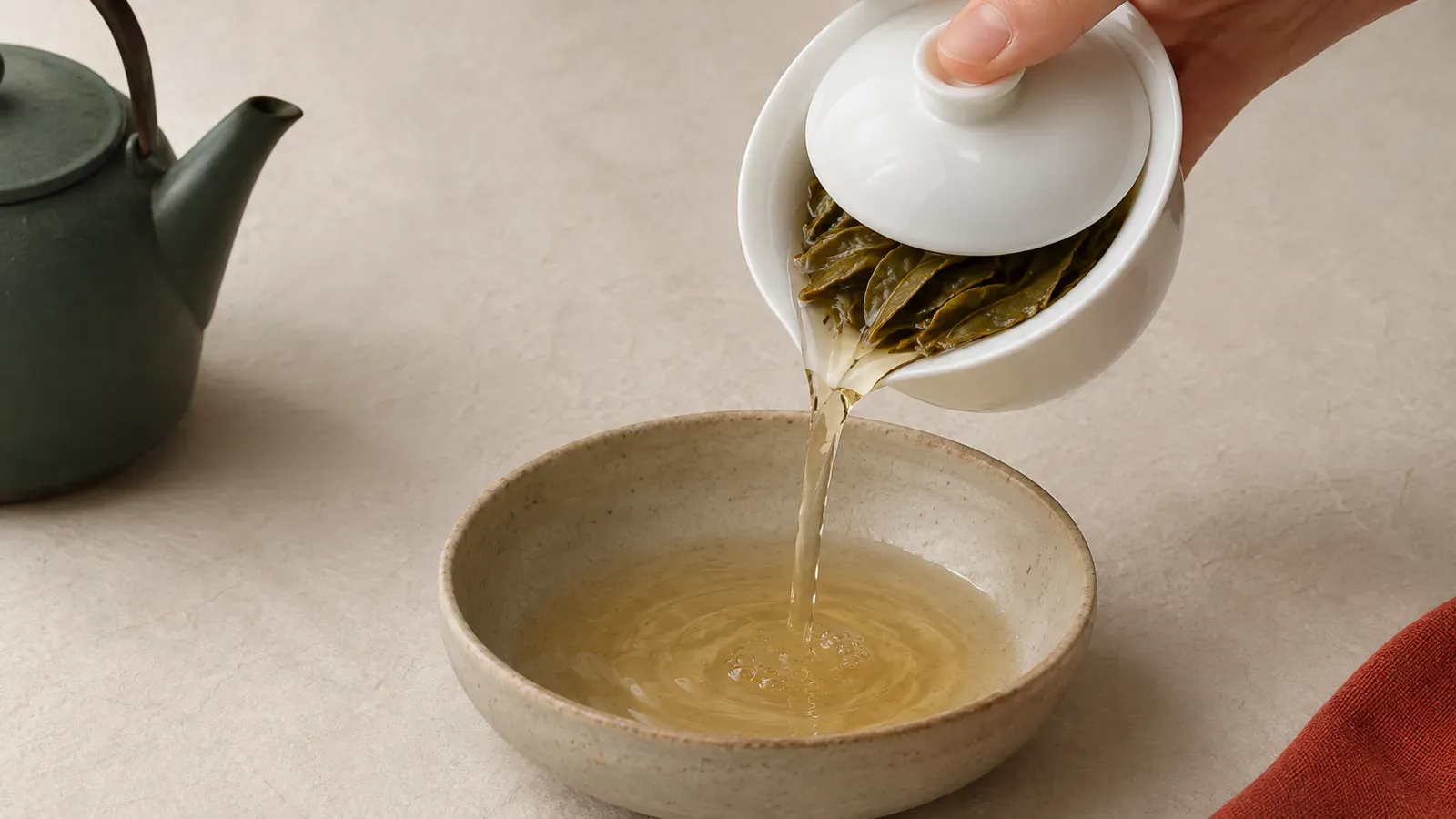
- Rinse briefly with hot water. Pour hot water over the leaf, wait five to ten seconds and pour it away, the same way you would rinse pu'er before hot brewing. This washes off dust from pressing and storage and starts the leaf opening.
- Add cold or room-temperature water. Use a glass bottle or jar with a lid.
- Put it in the fridge. See the times below.
- Taste, then strain. When it tastes right, pour the tea off the leaf into a clean container. Leaving the leaf in means the tea keeps getting stronger.
How long should raw and ripe pu'er steep in the fridge?
| Tea | Leaf per litre | Time in the fridge |
|---|---|---|
| Young raw pu'er | 8–10 g | About 4–8 hours |
| Ripe pu'er | 8–10 g | About 8–12 hours, or overnight |
Treat these as ranges to start from, not fixed rules. Tightly pressed tea needs longer than loose leaf. Small, broken leaf needs less. The simplest method is to taste a little at the short end of the range and leave the rest in if it is still thin.
If the result is too strong, add water. If it is too weak, use more leaf next time. Adding leaf works better than adding many more hours.
Which pu'er suits cold brewing?
- Young raw pu'er. This is the classic choice. Cold water brings out its floral and fruity side and a clear sweetness, and holds back much of the bite it can have when hot.
- Ripe pu'er. It makes a dark, smooth, mellow cold brew with a soft sweetness. Choose one without a strong fermentation smell, because that note does not fade in cold water.
- Aged tea. It works, but it is not the best use of it. The depth and warmth people value in aged pu'er show most clearly with boiling water.
If you are not sure which type you have, the difference is explained in ripe vs raw pu'er.
A practical point: cold brewing uses a fair amount of leaf for one bottle, so everyday tea makes more sense than the best cake on the shelf. Leftover crumbs from breaking a cake are fine for this, with a shorter time.
How does cold-brewed pu'er taste different from hot?
Cold water draws out the compounds that taste bitter and astringent much more slowly than hot water does. Sweetness and lighter aromas come through first. So the same tea tastes different:
- Less bitterness and astringency. A young raw tea that grips the tongue when hot can be gentle when cold.
- Lighter body. The thick, coating texture of hot ripe pu'er becomes thinner and cleaner.
- A narrower range of flavour. Deep, woody and earthy notes are quieter. You get one steady taste, where gongfu brewing gives a tea that changes round by round.
- Lighter colour. Even ripe pu'er is usually paler than it is hot.
Neither version is the real one. If you want to know what a pu'er tastes like in full, brew it hot first and cold brew it second.
How long does cold-brewed pu'er keep?
Keep it in the fridge, with the lid on, and drink it within about a day. This is a matter of freshness. After that the aroma fades and the taste turns flat and dull.
Two habits help. Strain the leaf out once the tea is ready, so it does not keep steeping. And keep the container closed, because tea picks up fridge smells easily.
Make only what you will drink by the next day. A litre is plenty for most households.
What are the common mistakes?
- Dropping in a whole chunk. The outside brews and the middle stays dry. Break it into flakes first.
- Skipping the rinse. Cold water does not settle or wash away dust the way a hot pour does, and the dust ends up in the bottle.
- Leaving the leaf in for days. The tea goes from strong to harsh and stale. Strain it.
- Brewing it on the counter. Tea left for hours at room temperature loses freshness quickly. Steep it in the fridge from the start.
- Using far too much leaf. Cold brew is meant to be light. A hot-brewing dose in a small bottle gives a heavy, astringent drink.
- Using water you would not drink plain. Cold brew is nearly all water and nothing hides its taste. Filtered or soft bottled water works well.
- Forgetting about ice. Ice dilutes. If you plan to pour over ice, brew a little stronger.