 Chama Cellar
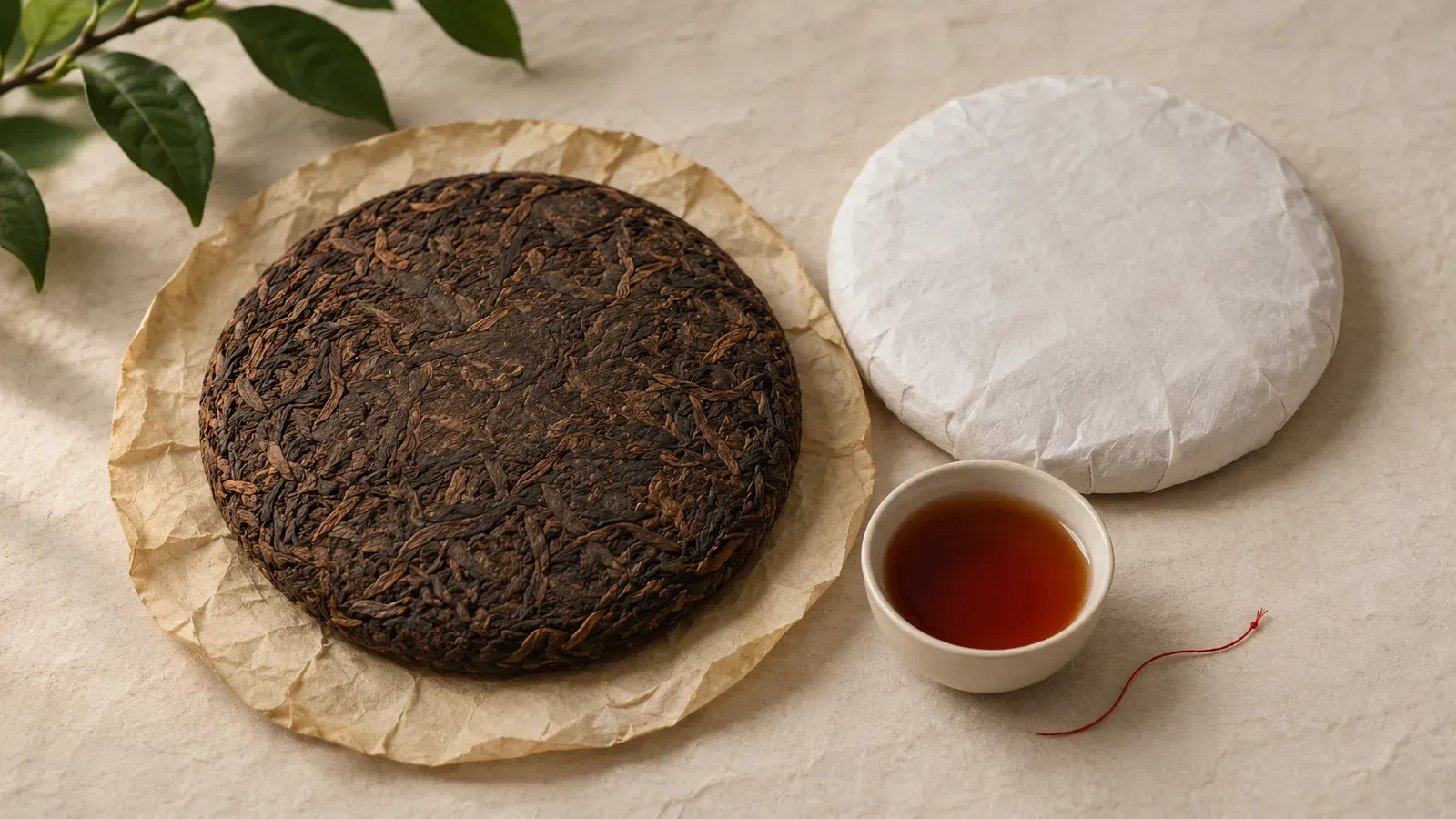
Green tea is at its best in the months after it is made and fades from there. Pu'er is treated differently. People buy it to keep, and a well-kept old cake usually costs more than a new one. So the date on the wrapper is rarely the thing to worry about. How the tea was kept is.
Does pu'er go off like other teas?
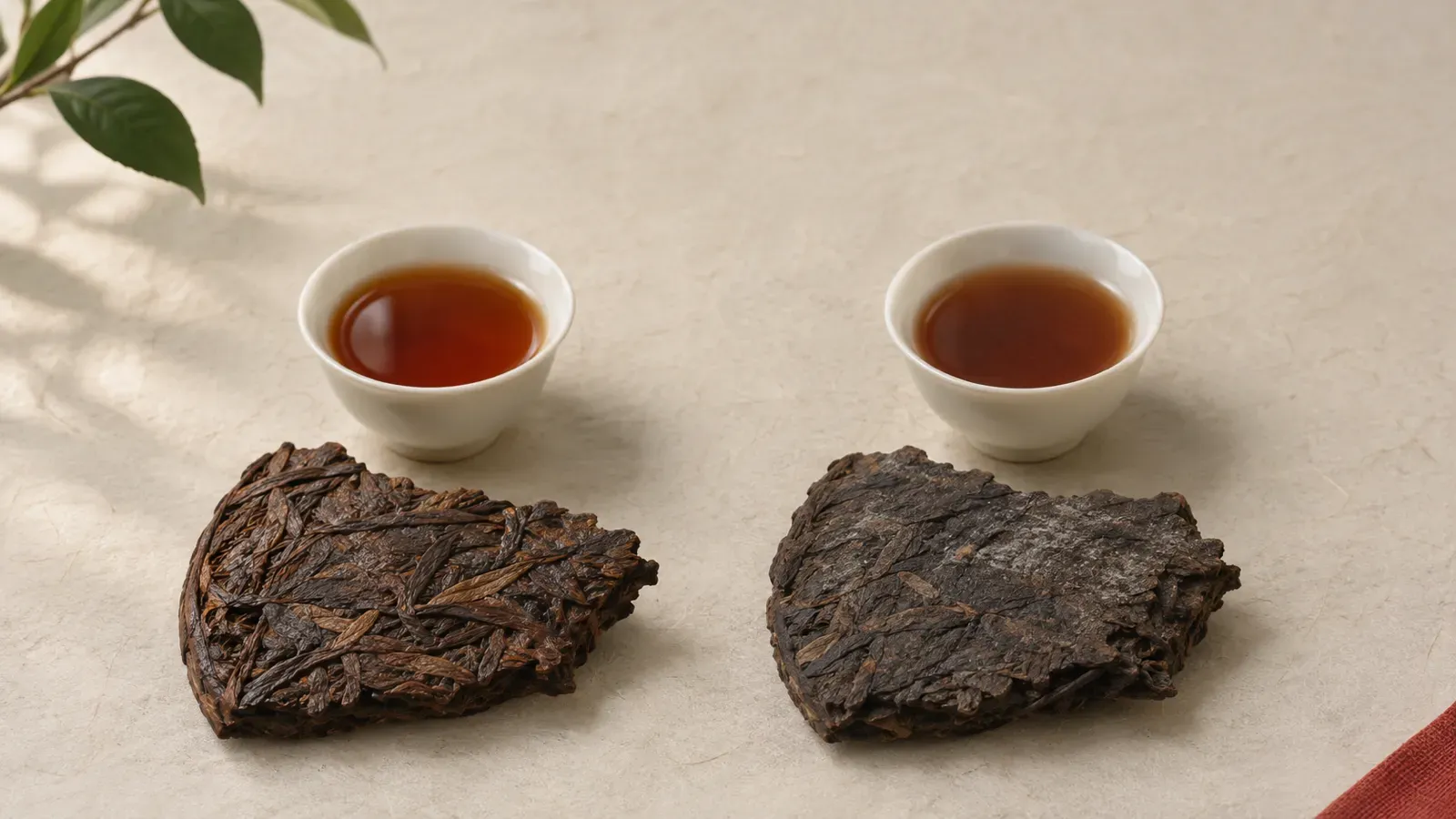
Green tea is prized for freshness, and air, light and time take that away within a year or two. Pu'er is made from sun-dried leaf that goes on changing slowly after it is pressed. The bitterness and sharp aroma of a young raw cake soften, the colour darkens and the taste gets deeper. That slow change is the reason people store it.
This only holds when the storage is right. Pu'er does not have an expiry date, but it is not indestructible.
Why does the wrapper still print a shelf life?
China's labelling rules for prepackaged food ask for a production date and a shelf life on the pack, and tea is prepackaged food. Producers of pu'er therefore have to print something.
What many of them print is a sentence, not a number: 在符合贮存条件下可长期保存, "can be stored long-term under suitable storage conditions", or wording close to it. The phrasing follows the national standard for pu'er as a geographical-indication product, GB/T 22111, which describes the tea as suitable for long-term keeping when stored as the standard sets out.
Some wrappers give a fixed number of years instead, and some export packs carry a best-before date because the destination market expects one. Those are labelling choices. They are not a prediction of when the tea will turn. For the other items on the label, see how to read a pu'er wrapper.
What actually ruins a pu'er cake?
| Cause | How it happens | What you find |
|---|---|---|
| Damp | A humid room, a basement, an outside wall, a cake packed away while still moist | Fuzzy mould and a musty smell |
| Odours | Storage in a kitchen, or next to spices, perfume, mothballs, fresh paint or scented wood | The tea smells and tastes of something that is not tea |
| Sunlight and heat | A windowsill, a shelf by a radiator, a hot car | Faded leaf and a thin, flat or stale taste |
| Sealed airtight while damp | A plastic bag or tub closed over tea that has not dried out | Sour or stuffy smells, and mould in the worst case |
| Fridge | Cold, moist air, food smells, condensation each time the tea comes out | Any of the above |
Most of these are permanent. A light storage smell can air out over some months, but mould and soaked-in odours stay. The way to avoid all of them is in how to store pu'er cakes at home.
How can you tell if a pu'er has gone bad?
Check in this order.
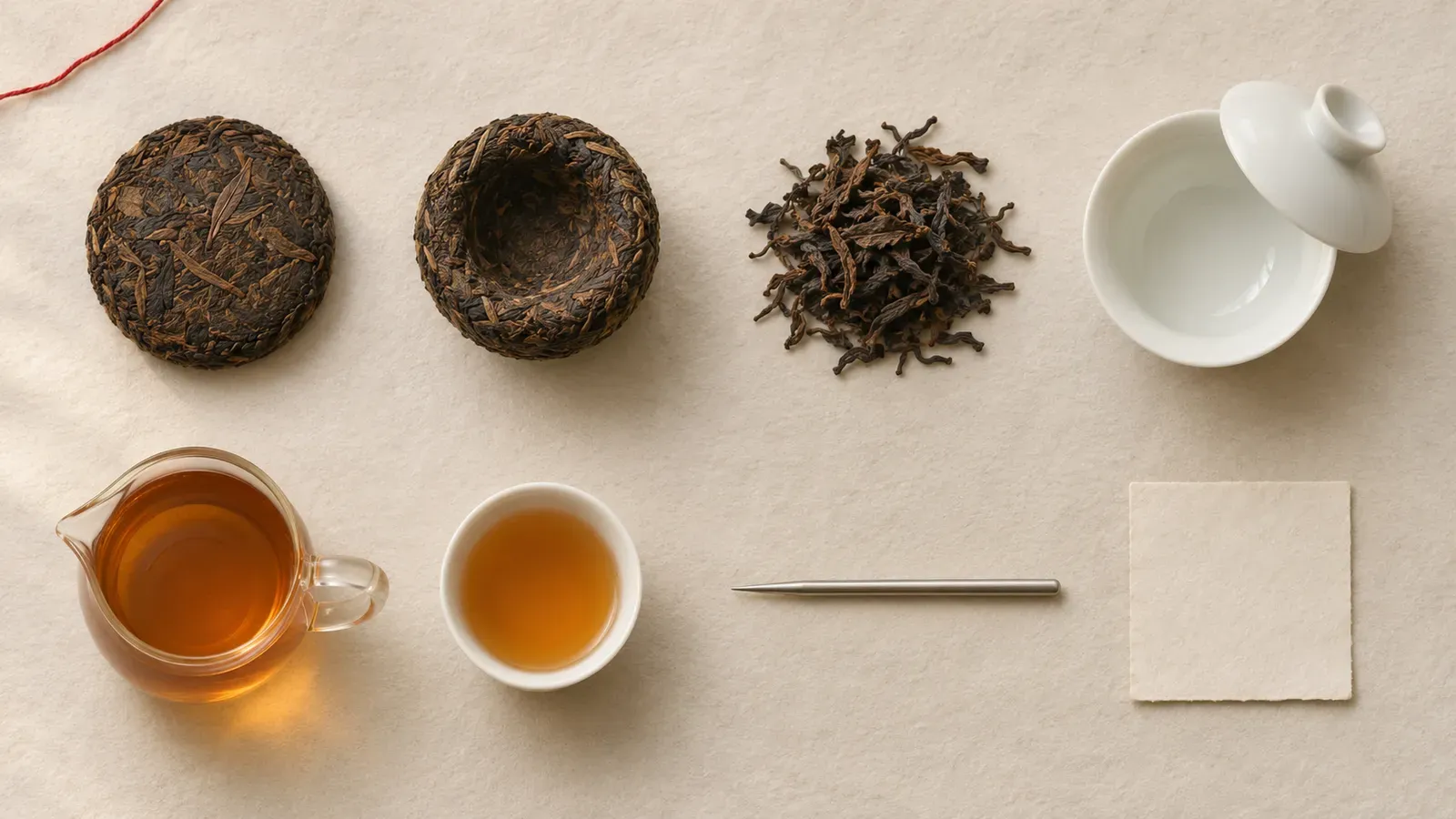
- Look at the dry cake. Fuzzy white, yellow or green patches on the surface or between the leaves are mould. Golden buds and an even, slightly frosty look on some aged tea are normal.
- Smell it. Clean pu'er smells of tea, wood, dried fruit or earth. A sharp musty smell like a damp cellar, a sour smell, or the smell of soap, spice or camphor are all faults.
- Break a piece open. The inside of the cake should look and smell like the outside, or cleaner.
- Rinse and smell the wet leaf. Hot water brings out storage faults at once. Should you rinse pu'er tea? explains the step.
- Look at the liquor. It should be clear. A liquor that stays cloudy after two rinses is a bad sign.
A cake with visible mould and a musty smell that does not fade should be thrown away. Rinsing does not fix it, and neither does more time in storage. If you cannot decide what you are looking at, treat it as a fault.
Tea from humid warehouses is a separate case. It can carry an earthy storage smell without being mouldy, and some drinkers like that style. Dry vs wet storage describes where the line is.
Is older pu'er always better?
No. Age is one input, and three others matter at least as much.
- The leaf it started with. Thin, weak tea gets older without getting more interesting.
- The storage. Ten clean years beat twenty careless ones. A cake kept too dry for too long can taste empty, and one kept too damp tastes of the warehouse.
- Your own taste. Some people prefer raw pu'er young, when it is bright, floral and a little bitter. Others want it dark and mellow. Neither is wrong.
A stated age is also the easiest thing on a cake to exaggerate. An old date on the wrapper tells you less than a clean smell and an honest storage history.
Do raw and ripe pu'er age differently?
Yes.
- Raw pu'er (生茶) changes the most. A young cake is green, bitter and aromatic. Over many years in good storage it turns darker, rounder and sweeter. This is the tea people lay down for the long term.
- Ripe pu'er (熟茶) was fermented in the factory before pressing, so most of the change has already happened. In its first few years the fermentation smell fades and the cup gets smoother. After that it changes slowly. It keeps for a long time, but there is less reason to wait.
The two types are compared in ripe vs raw pu'er.
Which pu'er should you not keep for years?
- Tea bags and fine-cut pu'er. Small particles lose their aroma quickly. Drink them within the period printed on the pack.
- Flavoured or blended products. Pu'er packed with flowers, citrus peel or added flavouring follows the shelf life of the added ingredient, not of the tea.
- Small loose samples. A few grams in a paper bag have a lot of surface and little protection. They are for drinking, not for ageing.
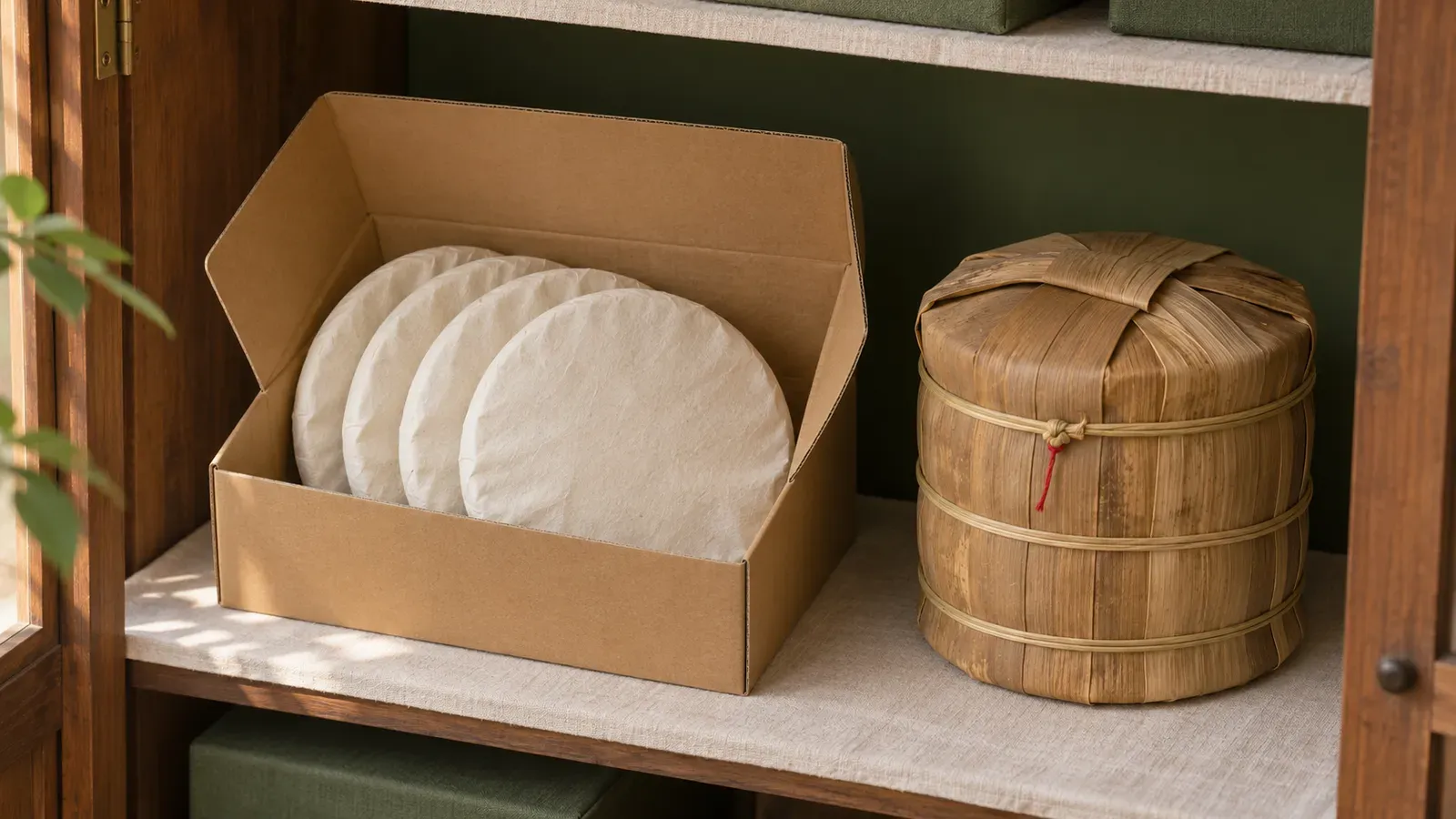
- A cake broken into a jar. Fine for some months of drinking. For long keeping, leave cakes whole in their wrappers.