 Chama Cellar
Pu'er comes with its own vocabulary. Most of it is Chinese, written in pinyin, and shops do not all spell it the same way. This page gives short definitions of the words a buyer or drinker meets most often. Tone marks are left off. Where another guide covers a term in depth, the entry links to it.
What do the words for types of pu'er mean?
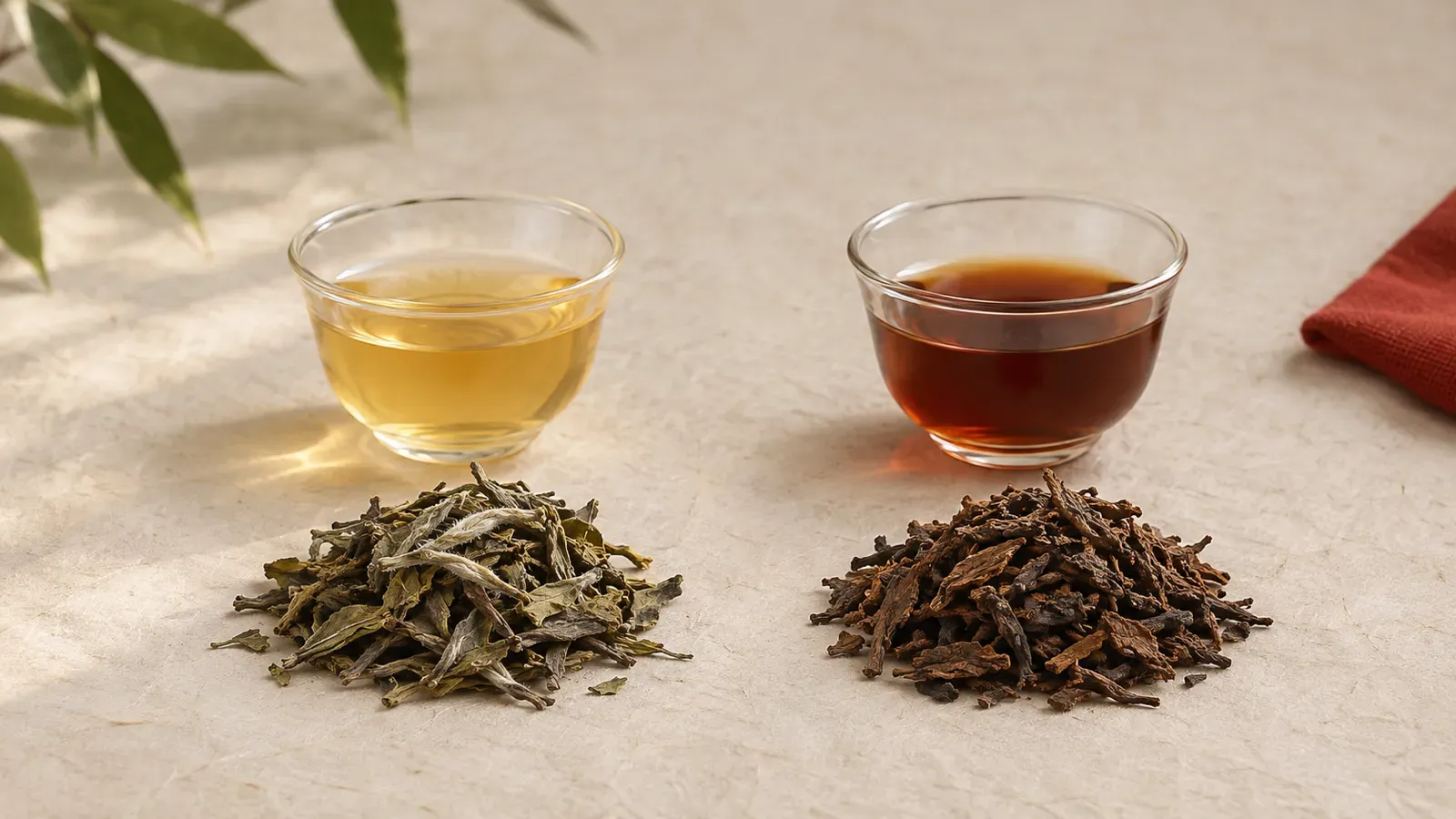
- Sheng (生茶, sheng cha): Raw pu'er. Sun-dried leaf that is steamed and pressed with no pile fermentation. It starts out fresh and bitter-sweet and changes slowly in storage. See ripe vs raw pu'er.
- Shou (熟茶, shou cha): Ripe pu'er, also spelt shu. The same leaf, fermented in damp piles before pressing, which makes it dark and smooth. Older English texts call it "cooked", although nothing is cooked.
- Maocha (毛茶): The rough, loose, sun-dried tea that all pu'er starts from. In full it is shai qing mao cha (晒青毛茶). What is pu'er tea? goes through the steps.
- San cha (散茶): Loose-leaf pu'er, sold unpressed.
- Hei cha (黑茶): "Dark tea", the Chinese tea family in which pu'er is usually placed. It is not what English calls black tea, which is hong cha (红茶, "red tea") in Chinese.
- Chun liao (纯料): Single-origin. The maker's statement that all the leaf comes from one mountain or one village. Usage varies, and a wrapper cannot prove it.
- Pin pei (拼配): A blend. Leaf from different areas, grades or years mixed to a recipe. Blending is an old and normal practice in pu'er and is not a mark of lower quality.
What do the processing words mean?
- Sha qing (杀青): "Kill-green". Heating the fresh leaf in a wok or drum to stop most of the oxidation.
- Rou nian (揉捻): Rolling. The heated leaves are rolled and twisted, by hand or machine, to bring the juices to the surface.
- Shai qing (晒青): Sun-drying. The rolled leaf is dried in the sun and not in an oven. Leaf dried with high heat is not suitable material for pu'er.
- Wo dui (渥堆): Wet-piling. Maocha is dampened, piled and turned over several weeks so that it ferments. This is the step that makes ripe pu'er. The method was worked out in Yunnan in the 1970s.
- Chen hua (陈化): Ageing. The slow change of pressed tea in storage over years.
What do the words for shapes and packaging mean?
The guide to cake shapes and sizes and the guide to reading a wrapper cover this group in detail.
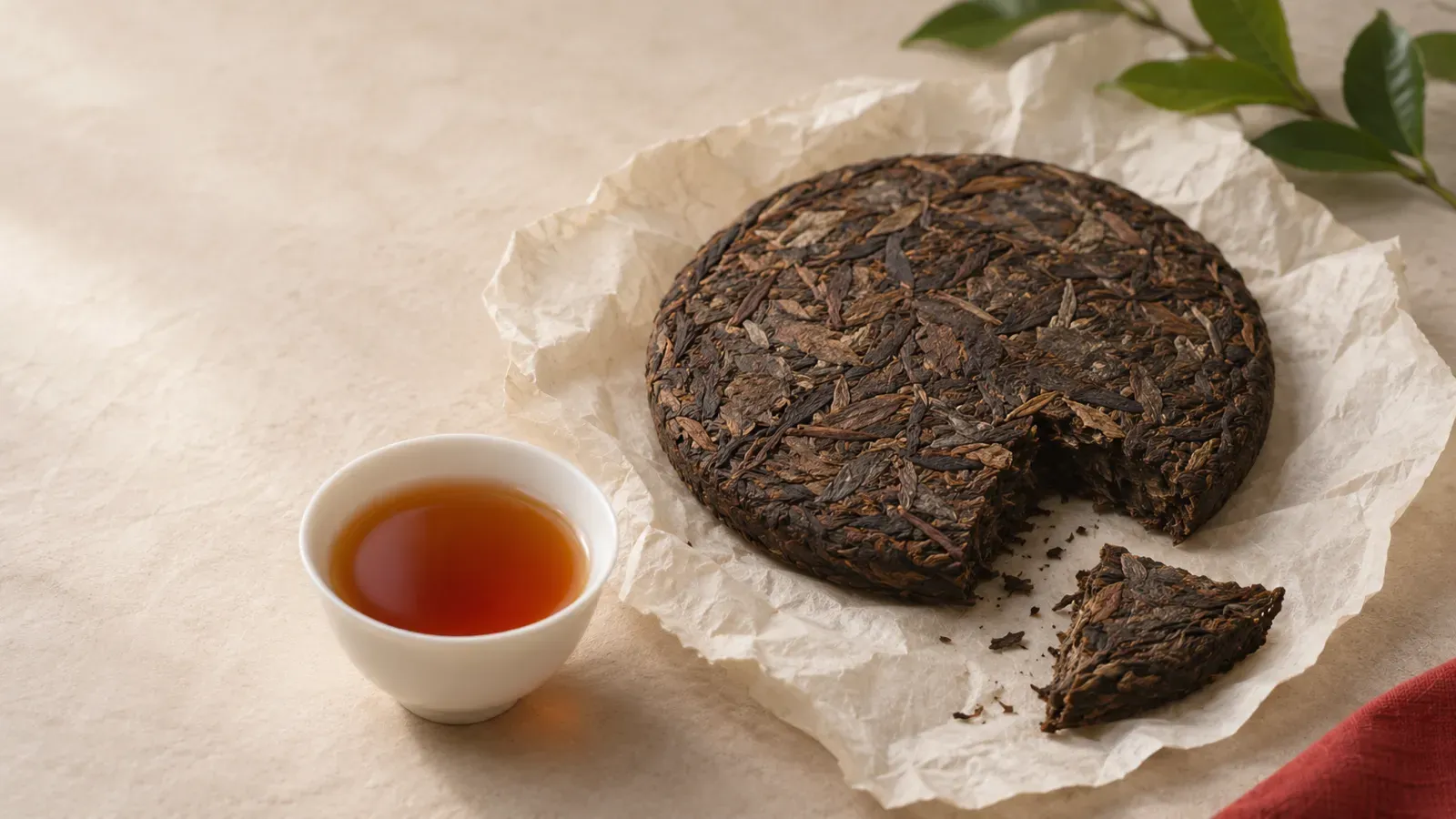
- Bing (饼, bing cha): A round, flat cake, the most common shape. The standard weight is 357 grams. Sometimes spelt beeng.
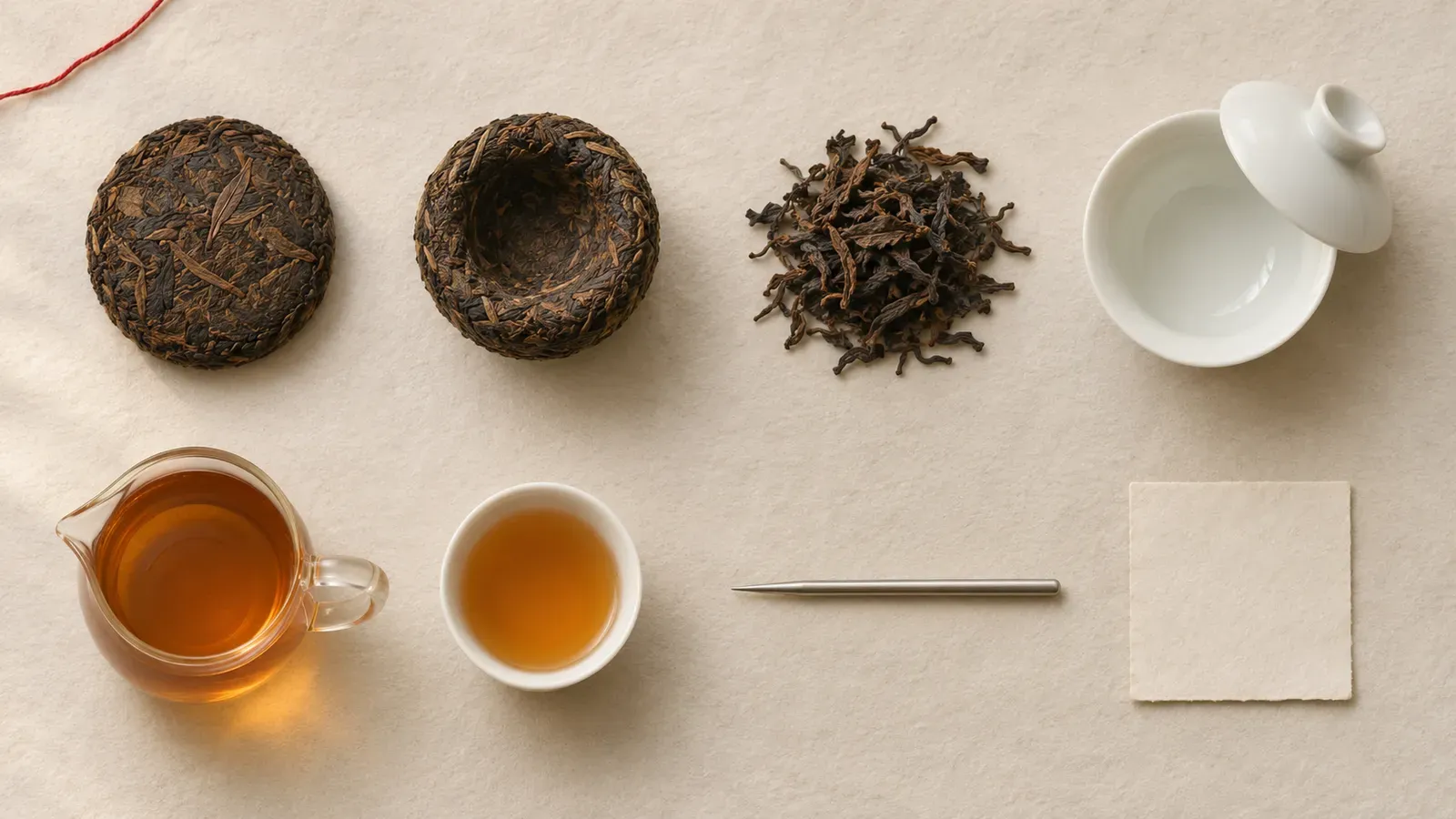
- Tuo (沱, tuo cha): A small bowl- or nest-shaped piece with a hollow underneath, usually tightly pressed. Common sizes are 100 and 250 grams.
- Zhuan (砖, zhuan cha): A brick. A rectangular block, often 250 grams.
- Qi zi bing (七子饼): "Seven sons cake". The name for standard round cakes packed seven to a stack.
- Tong (筒): A stack of cakes wrapped together, traditionally seven cakes in bamboo shoot husk. Some producers now pack five, or use paper.
- Jian (件): A case of several tongs. The traditional case held twelve tongs, which is 84 cakes. Case sizes today differ from one producer to another.
- Nei fei (内飞): A small paper ticket pressed into the face of the cake, usually carrying the brand mark.
- Nei piao (内票): A larger loose slip inside the wrapper that describes the tea or the producer.
- Mai hao (唛号): A recipe code such as 7542, used by the large factories. Read in the usual way, the first two digits are the year the recipe was first made, the third is a nominal leaf grade and the last stands for the factory. It does not tell you the year of the cake.
What do the words for trees, gardens and seasons mean?
- Gushu (古树): Old-tree or ancient-tree tea. There is no single rule for the label. One hundred years is the threshold most often used. See the tea regions of Yunnan.
- Qiaomu (乔木): "Arbor". A tea plant grown as a tree with a trunk, not pruned into a low bush. In the trade it is used loosely and does not by itself mean the tree is old.
- Taidi (台地茶, taidi cha): Plantation or terrace tea. Bushes planted close together in rows and kept low by pruning. Most pu'er on the market comes from gardens like this.
- Shan tou (山头): "Mountain". The named mountain or village a tea is said to come from, such as Yiwu or Bulang.
- Chun cha (春茶): Spring tea, picked roughly from late February or March into May. It is usually the most sought-after harvest of the year.
- Gu hua cha (谷花茶): Autumn tea, literally "grain flower tea", named after the time the rice comes into flower. It is picked around September and October.
- Yu shui cha (雨水茶): "Rain tea". The summer harvest, picked in the rainy season. It is generally thought thinner in taste than spring or autumn tea.
What do the storage words mean?
- Gan cang (干仓): Dry storage. Tea kept in clean, ventilated rooms with no humidity added. Ageing is slow and the aroma stays clear. See dry vs wet storage.
- Shi cang (湿仓): Wet storage. Tea kept for a time in a deliberately humid warehouse to speed ageing. Also called traditional storage (传统仓, chuan tong cang) or Hong Kong storage.
- Cang wei (仓味): Storage smell. The scent of damp earth, old books or a cellar that tea picks up in a humid warehouse. A light one usually fades with airing.
- Tui cang (退仓): Resting tea in drier conditions after humid storage so that the storage smell settles.
- Dui wei (堆味): Pile smell. The earthy, sometimes slightly fishy smell left on newly made ripe pu'er by wet-piling. It comes from the factory, not from the warehouse, and usually fades.
For storing tea yourself, see how to store pu'er cakes at home.
What do the tasting words mean?
What does pu'er taste like? describes these in use.
- Hui gan (回甘): "Returning sweetness". The sweet feeling that arrives in the throat after a bitter sip.
- Sheng jin (生津): A mouth-watering feeling at the sides of the tongue and in the cheeks.
- Hou yun (喉韵): "Throat feel". A pleasant sensation that lingers in the throat after swallowing.
- Ku (苦) and se (涩): Bitterness and astringency. Ku is a taste. Se is the dry, puckering feeling on the tongue. Both are normal in young raw pu'er, and in a good tea they pass quickly.
- Cha qi (茶气): Literally "tea energy". The tea-drinker's word for how a tea feels in the body, as opposed to how it tastes. It is a subjective word, and drinkers do not agree on what counts.
- Chen xiang (陈香): Aged aroma. The woody, mellow smell of well-stored older tea.
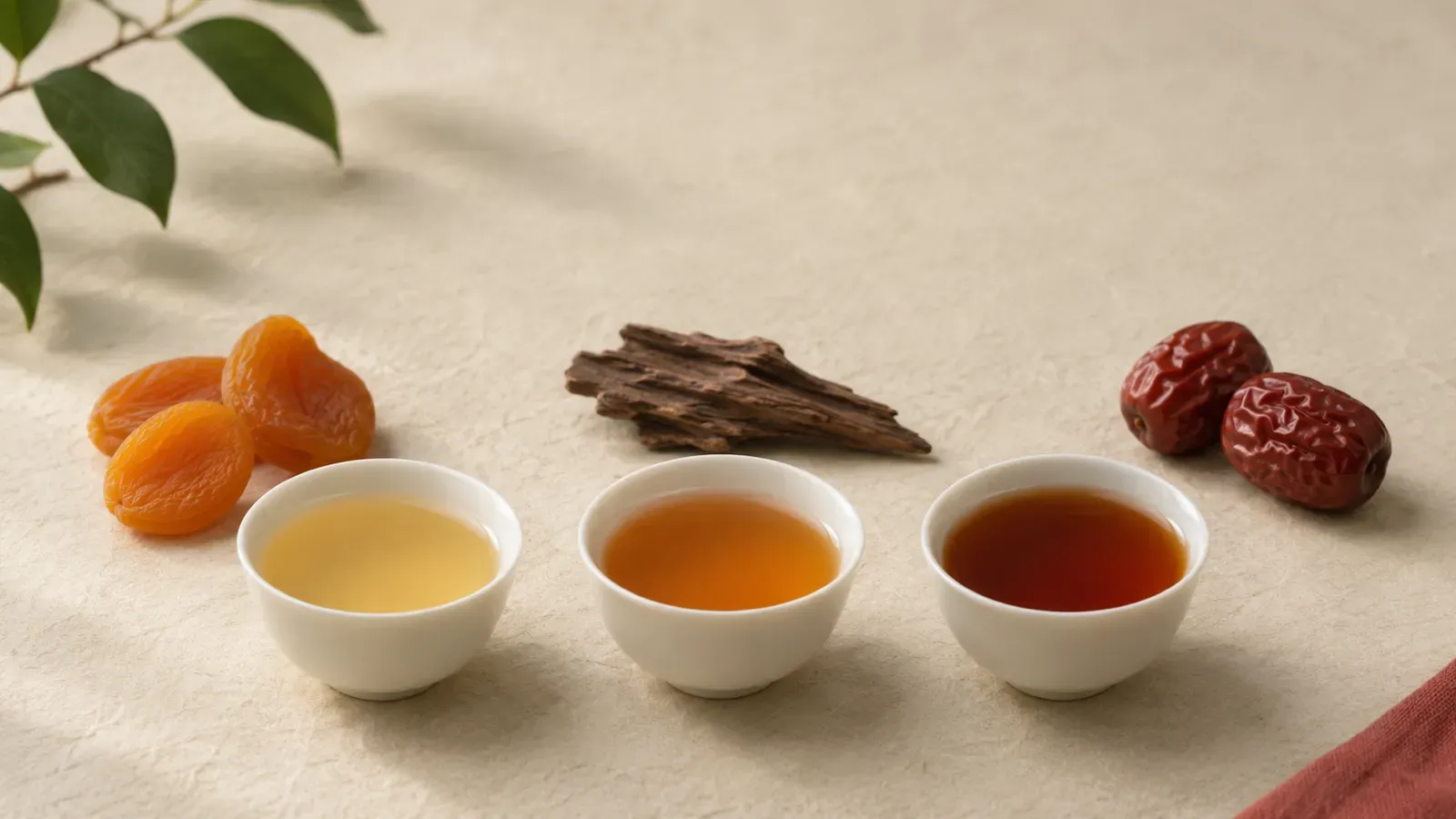
- Tang se (汤色): Liquor colour. The colour of the brewed tea in the cup, from pale yellow in young raw pu'er to deep red-brown in ripe.
- Ye di (叶底): The spent leaves. Drinkers spread them out after brewing to look at the leaf itself and for signs of how it was processed and stored.
- Nai pao (耐泡): Lasting well. Said of a tea that keeps giving flavour over many infusions.
What do the brewing words mean?
- Gaiwan (盖碗): A lidded bowl, usually of porcelain and around 100 to 150 millilitres, used as a small brewing vessel. See how to brew pu'er gongfu style. You can also brew without one.
- Gong dao bei (公道杯): Fairness pitcher. Each infusion is poured into it in one go, so that every cup has the same strength.
- Xing cha (醒茶): "Waking the tea". Most often the short rinse before the first cup, also called xi cha (洗茶, "washing the tea"). The same word is used for airing broken-up tea in a jar before drinking. See should you rinse pu'er?
- Chu tang (出汤): Pouring the tea off the leaves at the end of an infusion.
- Cha zhen (茶针): Tea pick. A pointed tool for prying leaf off a cake in layers. A blunt tea knife (茶刀, cha dao) does the same job.
- Cha lou (茶漏): A small strainer that sits on the pitcher and catches broken leaf.
You do not need any of these words to enjoy the tea. They help mainly with reading descriptions, and with asking a seller a precise question.